 Skip to content


How to get hired as a 3D artist: what the Battlefield art director looks for
A Battlefield art director says “I don’t know” can be a great interview answer.
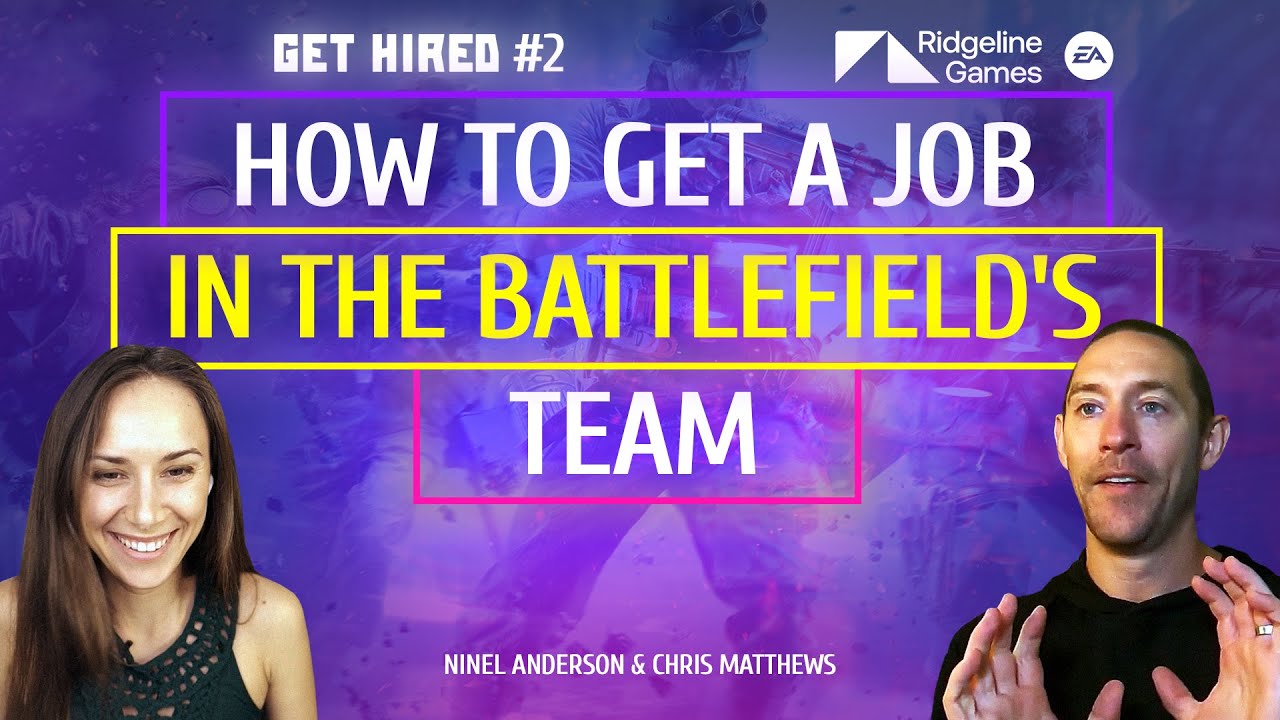
How do you get hired as a 3D artist? Chris Matthews, art director and co-founder of Ridgeline Games, answers in this episode of Get Hired. He talks about interviews and 3D portfolios.
Here is the short version: how to answer when you do not know, what to put in a portfolio, and what he wants to see in your models and props.
A show by Devoted Studios. Art directors and hiring leads tell artists what they look for. Here is the short, practical version of the episode.
The short answer
- Say “I don’t know yet”An honest answer tells Chris more than a guess. Add how you are learning it.
- Pick 5 to 10 piecesChoose the best work that shows who you want to be.
- Show how you made itAdd geometry and texture breakdowns, not only the final render.
Who is talking
Chris Matthews
Art Director and co-founder, Ridgeline Games (EA)
- At recording
- Studio art director and co-founder of Ridgeline Games, a first-party EA studio.
- The project
- A Battlefield narrative game, and the wider Battlefield franchise.
- First games job
- Chris studied design in the mid 1990s. He got his first job by playing his reel on a Sony PSP.

The host is Ninel Anderson, CEO of Devoted Studios.
The episode was recorded in 2023, so studio details may have changed. His advice about portfolios does not depend on one studio.

“I don’t know” can be
a very good answer
A reader asked Chris what makes an applicant different in an interview. His answer is a surprise. He says some of the best answers are “I don’t know”.
Chris interviews many people. He often asks a question and listens to the answer. A straight, honest answer shows him what kind of person he is talking to.
He likes this kind of answer: “I don’t know. I have not learned it yet. But I will.” He also likes a short example. It shows how you are learning it now. Before your next interview, pick 1 skill you do not have yet. Prepare 1 honest sentence about how you are learning it.

I actually think some of the best answers people give in interviews is I don’t know
Pick 5 to 10 pieces
that show who you are
Chris says clarity of purpose matters more than anything else in a portfolio. Look at everything you have made. Then pick the 5 or 10 best pieces.
Choose pieces that show what you want to be. They also show who you are as a person. Every piece you keep should help the viewer understand your goal.
Later, in the portfolio review, he adds a point about range. A mix of styles is good. But a theme helps the viewer understand your work as they scroll through it. Tomorrow, write 1 sentence about what you want to be. Then check each piece against it.
Clarity of purpose is beyond any other thing in the portfolio
Show how you made it,
not only the final image
The first thing Chris asks is how did this person get there. For him, a cool image is not enough.
He has seen great images that took 6 months to make. He has also seen great images made in a couple of evenings. He says this tells him who the person might be in a studio.
So add your process to your page. Show your geometry breakdowns and your texture breakdowns. Show the steps between the first idea and the final image. Try it with your best piece. Write down 3 steps you took, then show them.
Models ready for production,
not only beauty renders
A reader asked what kind of models Chris likes most. He wants a high level of execution. He says sculpts and photogrammetry models should be cleaned up and ready to bake.
He loves to see cages, baking models and LOD chains. These show that you can prepare a model for a real game.
He often sees high-end models rendered in Octane or Cycles. They look incredible, he says. But they do not tell him how you will make things work. A game needs all pieces to work on screen together. So add the technical side to your portfolio.
they look incredible but they don’t really tell me anything about how you’re going to execute
Show a prop in a scene
and on its own
When Chris reviewed a prop portfolio, he gave 1 clear tip. Show your object in a scene, if you can. Think about the place where it will live.
Then show the same object alone. Chris says the scene gives the big picture, the macro. The single prop gives the small details, the micro. Together they show how an artist thinks.
He also checks the quality across the scene. In one image, the table looked like a different quality level from the jug. In another, two objects had very different texture sharpness. Artists call this texel density. Check that every object in your scene has the same level of detail.
it just shows you know you get the sort of macro and then you start to get the micro of how the artist is thinking about stuff
What Chris likes in 2 portfolios,
and what he would change
In a bonus part, Chris gives feedback on the portfolios of 2 artists: Andrii Lukashevich and Mod Ratchata (both on ArtStation). Their work is credited under each image. Here are the lessons.


What works
- ✓A strong clear vision, with other styles tried too. Studios do not always make what you like to make.
- ✓Hand painted textures with clean brush strokes and few blurs. Chris says hand painting helps you understand form, light and color theory.
- ✓A model breakdown on the page, with maps such as albedo and detail.
- ✓Topology that is easy to check. Chris would ask to see it in an interview.
What he would change
- ✕Metals that look shiny, almost like chrome, with no impacts, scrapes or oxidation.
- ✕The same eyes and the same techniques in many pieces. Try a different age or style.
- ✕Too much detail in 1 small part, such as earrings next to the face. It pulls the eye away.
Watch the full episode
Takeaways
To sum up: what to take from this episode
- An honest “I don’t know yet” can be a very good interview answer.
- Pick 5 to 10 pieces that show who you want to be.
- Show your process with geometry and texture breakdowns, not only final renders.
- Clean models, cages, bakes and LODs show that you can work in production.
- Show each prop in a scene and on its own, with the same quality in both.
- Use a clear theme, so a viewer understands your work as they scroll.
More from Get Hired
About Devoted
Why we make Get Hired
Get Hired is a show by Devoted Studios. We build art and engineering teams for game studios, so we look at portfolios and talk with hiring leads all the time. We made the show to share what they tell us with every artist, not only with the people we work with.
Devoted is a team of 300+ people. Studios call us when they have a hard problem and do not yet know how to solve it. We join their team and work as part of it.
Chris says a clear purpose and honest answers matter. Watch the full episode to see how he reviews real portfolios. Subscribe to the channel, and say hi if you want to talk about working with us.
Episode: Get Hired #2, Devoted Talks, November 2023. Watch on YouTube
Quotes and timestamps: from the episode. Timestamps open the video at that moment. Studio details were true when it was recorded and may have changed.