 Skip to content


How to get hired as a junior game artist: advice from the art director behind LEGO 2K Drive
An art director says your sketchbook is a window into your mind.
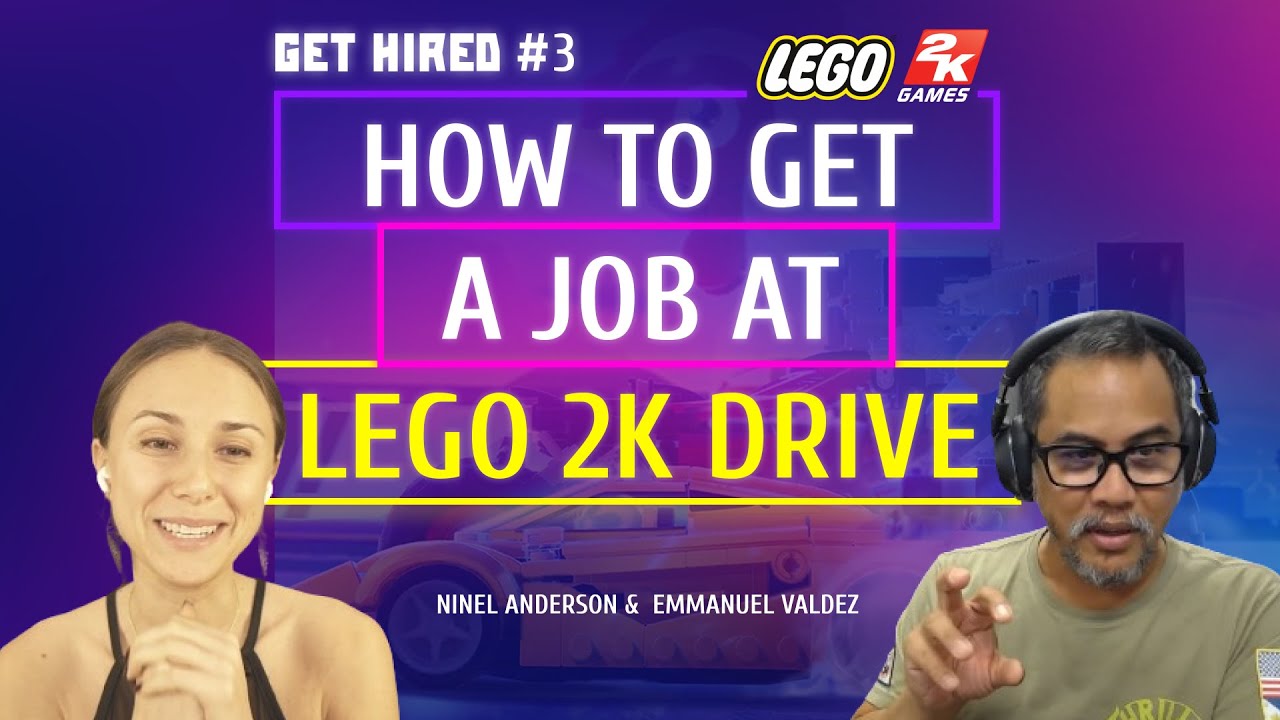
How do you get hired as a junior game artist? Emmanuel Valdez, art director on LEGO 2K Drive at Visual Concepts, answers in this episode of Get Hired. He talks about how he builds a team and finds young artists.
Here is the short version: why range matters, how students get seen, and what a junior artist showed to get hired.
A show by Devoted Studios. Art directors and hiring leads tell artists what they look for. Here is the short, practical version of the episode.
The short answer
- Show rangeHe wants artists who can try different styles, not only one.
- Add sketchbook pagesSketches show how you think when nobody gives you rules.
- Put your best work firstThis is his advice for a reel, and he says it especially for animation.
Who is talking
Emmanuel Valdez
Art Director, Visual Concepts (2K)
- At recording
- Art Director on LEGO 2K Drive at Visual Concepts, a studio of 2K.
- Experience
- More than 30 years in games, as stated in the episode description.
- Teaching
- He taught for about 8 years at an art and design college, in the master’s program for game design. He has hired artists from that school.

The host is Ninel Anderson, CEO of Devoted Studios.
The episode came out in January 2024, so project details may have changed. The advice about portfolios does not depend on one project.

Hire for range,
not for one style
Emmanuel needed environment artists, prop artists and animators for LEGO 2K Drive. He did not want people who know only 1 style. He wanted generalists who can try different styles.
He did not look only for artists from stylized games. He did not look only for realistic games either. He wanted people who can do both. He says an artist can stay on 1 project for a very long time. Then they get stuck in that art style.
He also says he does not like to keep people in 1 narrow role. He tries to give artists chances to use their other skills. For your portfolio, add 1 piece in a new style.

an artist could be on a project for a very long time and they learn that particular art style and they get stuck with it
Students get seen
through real work
Emmanuel taught at an art and design college for about 8 years. He says he hired from that school. The host says this is a good way to find talent early. Artists are still in school then.
His studio also had an internship program. The students kept studying while they worked. He says the interns did real work, not small office tasks.
He says this gave students real experience to take with them. It also let the team see who had potential. If you are a student, ask your school about programs with real production tasks.
it was real work they weren’t just giving us coffee or organizing our assets we gave them real work
Apply for a role
that matches your work
Emmanuel says to always apply first. He explains that early screening often removes some people. These are people who apply for roles they are not qualified for. His example is a VFX job with an animation portfolio. This is why a good match matters.
So match your portfolio to the job. Read the role, then choose the work that proves you can do it.
What gets his attention is a nicely presented reel. That means it is edited well. It also shows your best work in the best light.
a nice presented reel right meaning it’s edited well it shows their best work in the best light
Your sketchbook shows
how you think
The thing Emmanuel loves to see most is your sketches. He says a sketchbook is a window into your mind. It is not made for a project or an assignment.
In a sketchbook you are free. You explore, solve problems and have fun, without rules. He also loves notes, because he can see your thinking process.
He says he does not often see sketches in the first screening. So a few pages can make your application different. Add 2 or 3 pages with short notes. Keep the pages free and honest, like your real thinking.
Sketchbook is a window into their mind right it is not based on a project or an assignment
With little experience,
show story and process
Near the end, Emmanuel shows a reel from a junior artist hired 5 years ago. The artist had worked in QA and in defense. So he had no real art experience. But he knew Maya and Unreal, and he took classes on the side.
The reel had a decayed hospital scene. Emmanuel says there was a story behind it. Signs and angles guided the eye. Light and empty space showed the important things.
The artist also showed his whole process. Emmanuel loves to see where the details and the lighting came from. He says he looks for potential in early work. Today, he says, this artist is an expert in materials.
What worked in 3 reels
of artists he hired
Emmanuel reviews the reels of 3 artists he hired. Two of them are on screen with their names: Martin Moreno (environments) and Kevin McCullen (technical animation). Their work is credited under each image. Here are the lessons.


What worked
- ✓A story inside the scene, with signs, angles and light that guide the eye.
- ✓The whole process, not only the final image.
- ✓Early work that shows potential, even from a person with little art experience.
- ✓Clever use of the limits of the engine, and early lighting skills, in an intern’s work.
- ✓Charm, weight and strong poses in animation, with extra movement such as a wink.
What to change
- ✕Putting your best work at the end of the reel. His advice: put your best work at the beginning.
- ✕Hiding your process. He wants to see where the details and the lighting came from.
Watch the full episode
Takeaways
To sum up: what to take from this episode
- Studios can look for range. Show that you can work in more than 1 style.
- Students can be seen through teaching, school programs and internships with real work.
- Apply for roles that match your work, because early screening removes poor matches.
- Add sketchbook pages with notes to show how you think.
- With little experience, show the story and the whole process of a scene.
- Put your best work first in your reel.
More from Get Hired
About Devoted
Why we make Get Hired
Get Hired is a show by Devoted Studios. We build art and engineering teams for game studios, so we look at portfolios and talk with hiring leads all the time. We made the show to share what they tell us with every artist, not only with the people we work with.
Devoted is a team of 300+ people. Studios call us when they have a hard problem and do not yet know how to solve it. We join their team and work as part of it.
Emmanuel says he looks for potential in early work. Watch the full episode to see the 3 reels he reviews. Subscribe to the channel, and say hi if you want to talk about working with us.
Episode: Get Hired #3, Devoted Talks, January 2024. Watch on YouTube
Quotes and timestamps: from the episode. Timestamps open the video at that moment. Studio details were true when it was recorded and may have changed.