DEVOTED STUDIOS BLOG

Would you like to learn more about the actual CGI trends? If “yes”, this blog is for you. Here you can find recent industry news, detailed articles about video game development, interviews with top minds, our corporate updates, and more.
Gamedev
05.05.2026

Top Unreal Engine Game Dev Companies 2026

watch 17 hours

What This List Is Based On

  • Studios ranked by named, shipped Unreal Engine credits — not self-reported capabilities
  • Devoted Studios is the only studio on this list with UE5 co-development credits across Arc Raiders, Avowed, and The Outer Worlds 2
  • CTO Flavius Alecu shipped Red Dead Redemption 2 and GTA V before joining Devoted — engine depth, not engine familiarity
  • Evaluation criteria: shipped UE titles, co-dev vs task-shop model, certification track record, named client references
  • This is a DS-authored list — we’re on it, we’re first, and the credits back it up

Unreal Engine 5 is now the default build environment for a significant portion of PC and console development. Lumen, Nanite, and the MetaHuman pipeline have changed what’s technically achievable — and raised the floor on what’s expected. Studios that were adequate UE4 vendors are now being asked to operate at a level the engine didn’t require two years ago.

That gap is where co-development partnerships get made or broken. “We work in Unreal Engine” covers everything from a team that downloaded the editor last year to a CTO who shipped at Rockstar. This comparison is built on one filter: named credits on shipped UE titles — what the studio contributed, to which game, for which publisher.

Certifications are table stakes. Portfolio screenshots are marketing. Shipped game titles with named publishers are evidence.

UE5 Changed the Bar — Here’s What That Means for Your Partner

UE5 isn’t just a newer version. Lumen’s dynamic global illumination and Nanite’s virtualized geometry system mean artists and engineers are working with tools that require a fundamentally different production approach. A team that knows how to optimize for Lumen isn’t just faster — they’re operating in a different category from one that’s still applying UE4 habits to a UE5 project.

Arc Raiders (Embark Studios, UE5) — winner of Best Multiplayer at The Game Awards 2025 — demonstrated what a UE5 multiplayer extraction shooter can achieve technically: immersive sound design, cohesive PvPvE systems, and consistent performance under load. Avowed and The Outer Worlds 2 (both Obsidian, Unreal Engine) represent what the engine can deliver in single-player RPG contexts at AAA standard.

The studios that contributed to those titles weren’t learning UE5 on the job. That’s the bar this list is set to.

How We Evaluated These Studios

Four criteria, in order of weight:

1. Named shipped UE credits — The title, the publisher, what they contributed. No anonymous credits.

2. Engine depth — Not “we use Unreal Engine.” Demonstrated technical specialization: optimization, rendering pipeline, platform-specific UE work, or leadership with engine-level background.

3. Co-development capability — Can they take ownership of a production scope, or do they execute against a fully-defined brief? The distinction matters at every milestone.

4. Certification and platform track record — Especially relevant for UE projects targeting console — platform-specific UE optimization is a distinct skill from PC development.

The Studios

1. Devoted Studios — Three Shipped UE Titles. One CTO Who Built at Rockstar.

Devoted Studios is a full-cycle co-development and art production partner with Unreal Engine credits across three major shipped titles: Arc Raiders (Embark Studios, UE5), Avowed (Obsidian Entertainment, UE), and The Outer Worlds 2 (Obsidian Entertainment, UE, shipped October 2025).

The engine depth starts at the top. CTO Flavius Alecu’s credits include Red Dead Redemption 2, GTA V, and PS5 platform development — all before joining Devoted. Studio Art Director Ryan Lastimosa brings Apex Legends, Titanfall, and Call of Duty 4 from his time at Respawn Entertainment. These aren’t marketing credentials — they’re the standard the team was already held to before working on your project.

What Devoted means by co-development on UE projects:

Ninel, CEO of Devoted Studios:

Quote avatar

“Co-development is: ‘here’s our vision, here’s what broadly needs to be delivered — but we don’t really know all the details, and we need to figure it out together.’ A lot of ownership over the result. A lot of creativity.”

On Arc Raiders — a UE5 title that won Best Multiplayer at The Game Awards 2025 and the BAFTA Games Awards — Devoted contributed co-development, UI engineering, gameplay features, and performance optimization. On the Obsidian titles, the scope covered end-to-end environment art production and 3D character creation across a four-year partnership.


Arc Raiders game artwork

Arc Raiders
Embark Studios

  • Engine:
    Unreal Engine 5
  • Scope:
    Co-development, UI engineering, gameplay features, performance optimization
Result: Best Multiplayer — The Game Awards 2025 + BAFTA Games Awards

Avowed and The Outer Worlds 2 game artwork

Avowed + The Outer Worlds 2
Obsidian Entertainment

  • Engine:
    Unreal Engine
  • Partnership:
    4 years
  • Scope:
    End-to-end environment art production, 3D character creation
Two shipped titles. One continuous partnership.

Selected Credits: Embark Studios (Arc Raiders, UE5) · Obsidian Entertainment (Avowed, The Outer Worlds 2, UE) · Blizzard Entertainment (Overwatch 2) · Steel Wool Studios (FNAF: Secret of the Mimic) · Gearbox (Risk of Rain 2)

2. Certain Affinity — The US Studio That Knows Halo’s Engine From the Inside

Austin-based co-development studio with a long track record working embedded inside Microsoft’s Halo franchise — multiple entries, sustained engagement, first-person combat systems at AAA scale. Certain Affinity represents genuine co-development at the level where the partner is inside the production culture, not alongside it. A strong fit for US-based studios that need a co-dev partner with deep FPS pedigree and UE-adjacent technical experience. Less suited for art-heavy or multiplatform-porting scopes.

3. Blind Squirrel Games — The Studio That Modernized BioShock and Tony Hawk

Blind Squirrel’s signature is taking beloved catalogue IP and making it technically excellent on current hardware — BioShock: The Collection, Tony Hawk’s Pro Skater 1+2. Their Unreal Engine work is strongest in the remaster and port context: taking an existing title, preserving what made it work, and bringing it up to current platform standards. The right choice when the project is a remaster or catalogue revival rather than original development.

4. Sperasoft — AAA Technical Art at UE Scale

Sperasoft has contributed technical art and production support on AAA Unreal Engine titles across major publishers, with particular depth in rendering pipeline work and asset optimization at scale. Now operating as part of a larger group, they function as a high-throughput technical art resource for large studios with established pipelines. Best suited when a project needs additional UE technical art capacity rather than a creative co-development relationship with production ownership.

5. NeoBards Entertainment — Japanese IP, Unreal Engine, Western Platforms

Taiwan-based studio that has built their niche co-developing and porting Japanese IP to Western platforms on Unreal Engine — Resident Evil titles among their credits. NeoBards understands how to navigate the production culture gap between Japanese publishers and Western platform requirements, which is a specific skill that’s harder to find than it sounds. The right fit when the project is a Japanese IP targeting Western console release and requires a co-dev partner fluent in both contexts.

When to Bring In a UE Co-Dev Partner vs Build In-House

Quote avatar

⚙︎ Your UE5 scope is outpacing your current team size.

If the production complexity — rendering demands, platform targets, content volume — has grown faster than your headcount, bringing in a co-dev partner mid-production is faster and cheaper than hiring. Devoted’s 250+ team means capacity scales without a multi-month recruiting cycle.

Quote avatar

⚙︎ You’re targeting multiple platforms and don’t have console cert experience.

UE5 on PC and UE5 on PS5 or Switch are different optimization problems. If your team hasn’t shipped through platform certification on Unreal before, a partner with that track record is worth more than a third-party QA pass.

Quote avatar

⚙︎ Your art pipeline and engineering scope are both expanding.

Studios that need both UE art production and UE engineering support simultaneously usually end up managing two separate vendors. Devoted handles both in one engagement — the same team that does environment art in Unreal is the same team that handles engine optimization and platform integration.

Quote avatar

⚙︎ You need production to move while creative direction is still evolving.

A task shop stops when the brief changes. A co-dev partner with enough production ownership to work in parallel with your decision-making keeps the timeline moving. That’s the model Devoted operates on across all its UE projects.

Red Flags When Evaluating a UE Studio

🚩 “We use Unreal Engine” without a named shipped title.
Every studio lists the engine. The question is what shipped on it. If they can’t name a title and a publisher, the claim is unverifiable.

🚩 Portfolio screenshots with no client attribution.
Screenshots prove artistic output. They don’t prove the client was satisfied, the timeline held, or the work cleared a platform cert. Named client references with verifiable credits are the standard.

🚩 No distinction between UE4 and UE5 capability.
Lumen and Nanite require different optimization thinking than UE4’s rendering pipeline. A studio that treats UE5 as a UE4 upgrade hasn’t shipped enough on it to know the difference.

🚩 Leadership without relevant shipped credits.
“Our team has worked on AAA games” is not the same as leadership with named AAA credits. Devoted’s CTO shipped RDR2 and GTA V. That’s a specific and verifiable bar — ask every studio you’re evaluating for the equivalent.

🚩 They scope before auditing.
Any UE studio that gives you a timeline or cost estimate before running a technical audit of your build doesn’t have a process — they have a sales pitch. Scope in UE projects is determined by the source build, not the platform target alone.

FAQ

What is an Unreal Engine game development company?

An Unreal Engine game development company is a studio that builds, co-develops, or provides production services for games built on Epic Games’ Unreal Engine — including UE4 and UE5. Services range from full game development and co-development to specific disciplines like art production, engineering, porting, and technical art, all executed within the Unreal Engine environment.

What’s the difference between a UE studio and a co-development partner?

A UE studio uses Unreal Engine as their build tool. A co-development partner takes ownership of a defined production scope — which may include engineering, art, design, or platform work — and operates with enough context and decision-making authority to move the project forward without being managed on every variable. The distinction shows up when something changes mid-production: a task shop restarts from new instructions; a co-dev partner was close enough to catch the change before it became a problem.

Can Devoted Studios work on Unreal Engine 5 projects?

Yes. Devoted has shipped UE5 co-development credits on Arc Raiders (Embark Studios) — winner of Best Multiplayer at The Game Awards 2025 — contributing UI engineering, gameplay features, and performance optimization. Unreal Engine credits also include Avowed and The Outer Worlds 2 (both Obsidian Entertainment). CTO Flavius Alecu’s background includes Red Dead Redemption 2 and PS5 platform development. Full Unreal Engine services are available at devotedstudios.com/unreal-engine-games/.

How do I evaluate a UE studio before hiring?

Ask for named shipped credits — the game title, publisher, and specific contribution. Ask whether the studio distinguishes between UE4 and UE5 capability. Ask for leadership credits, not just company credits. Ask what their process is when scope changes mid-project. And ask for a technical audit before any timeline or cost estimate — a studio that scopes without auditing your build is guessing.

What Unreal Engine games has Devoted Studios worked on?

Devoted Studios’ Unreal Engine credits include: Arc Raiders (Embark Studios, UE5) — co-development, UI engineering, gameplay features, performance optimization; Avowed (Obsidian Entertainment, UE) — end-to-end environment art production, 3D character creation, four-year partnership; The Outer Worlds 2 (Obsidian Entertainment, UE) — environment art, 3D character creation, shipped October 2025.

Is Unreal Engine suitable for all game types?

Unreal Engine is used across a wide range of game types — AAA single-player RPGs, multiplayer extraction shooters, first-person action titles, and more. UE5’s Lumen and Nanite systems are particularly suited to graphically demanding PC and console titles. It’s less commonly used for mobile-first or 2D projects, where Unity’s runtime size and performance profile is typically more appropriate. Most studios building for PC and console in 2026 are defaulting to UE5 for new projects.

Devoted Studios is a full-cycle co-development and art production partner with shipped Unreal Engine 5 credits across major published titles. 250+ team, 15+ countries, 250+ projects shipped. If your project runs on Unreal, start the conversation here.

27.04.2026

8 Game Development Studios With the Credits to Prove It (2026)

watch 1 week

Not a paid list. No studios that couldn’t name their credits. Here’s who actually ships.

The co-development model has quietly become the infrastructure behind most of the games you’ve played in the last three years. Not because studios got smaller — because they got smarter about where they staffed up and where they brought in a partner.

But co-development is one of the most abused terms in the industry. A vendor who builds a few assets to spec will call themselves a co-dev partner. A studio that answers emails in your time zone will call themselves embedded. The word has been stretched far enough that it covers everything from task shops to genuine production partners — and telling them apart before you sign is the entire game.

This list is based on one thing: named, shipped credits. Not portfolio pages. Not “we’ve worked with AAA studios” with an NDA attached. If a studio can’t tell you the game title, the publisher, and what they specifically contributed — they’re not on this list.

1. Devoted Studios — The Studio That Co-Developed Arc Raiders and Spent Four Years Inside Obsidian

Devoted Studios is a full-cycle co-development and art production partner for game studios across platforms and genres. Engineering, porting, end-to-end art production, game and level design, LiveOps — handled inside one pipeline, not distributed across three vendors.

Founded in 2018, the studio runs 250+ core team across 15+ countries, with 90+ clients and 250+ projects shipped. The model is intentionally distributed — sourcing specialized talent globally rather than hiring to geography — with production leads that have shipped at Respawn, Rockstar, and Sony.

The leadership behind the work:

Ryan Lastimosa joined as Studio Art Director after building his credits at Respawn Entertainment — Apex Legends, Titanfall, Call of Duty 4. Flavius Alecu, CTO, shipped Red Dead Redemption 2, GTA V, and contributed to PS5 platform development. When Devoted pitches technical art and production discipline, these are the people setting the standard.

What Devoted means by co-development:

Ninel, CEO of Devoted Studios:

Quote avatar

“Co-development is: ‘here’s our vision, here’s what broadly needs to be delivered — but we don’t really know all the details, and we need to figure it out together.’ A lot of ownership over the result. A lot of creativity.”

That framing matters. A task shop needs a complete brief before they start. A co-development partner needs to understand what the game is trying to be — and has enough production ownership to make real decisions when that vision shifts mid-cycle.


Avowed game artwork

Avowed
Obsidian Entertainment Partnership

  • Partnership4 years
  • EngineUnreal Engine
  • Scope
    End-to-end environment art production, 3D character creation
“Four years. Two shipped titles. Zero missed milestones.”


Arc Raiders game artwork

Arc Raiders
Embark Studios

  • EngineUnreal Engine 5
  • Scope
    Co-development, UI engineering, gameplay features, performance optimization
  • Award
    Best Multiplayer — The Game Awards 2025 + BAFTA Games Awards
“Shipped on UE5. Won two major industry awards.”

The Obsidian partnership:

Devoted has maintained a four-year art production relationship with Obsidian Entertainment across Avowed and The Outer Worlds 2 — both Unreal Engine titles with demanding, established visual languages. The Outer Worlds 2 shipped October 2025.

Chris Naves, Lead Art Outsourcing Manager at Obsidian Entertainment:

Quote avatar

“The Obsidian team has been completely satisfied with Devoted Studios’ performance in all aspects — art quality, time management, adherence to style and timeline, communication quality control. Devoted does an excellent job and never hesitates to run the extra mile to guarantee the best outcome.”

On the engineering and co-dev side:

  • Risk of Rain 2 (Gearbox) — ported to 5 platforms simultaneously, first-submission certification on all.

  • Sunderfolk (Dreamhaven) — co-development, porting, platform certification, engineering.

  • FNAF: Secret of the Mimic (Steel Wool Studios) — co-development, porting, UI and gameplay engineering, 3D tech art. Invincible VS — co-development.

  • Invincible VS — co-development, porting, UI and gameplay engineering, 3D tech art. Invincible VS — co-development.

⭐ Selected Credits: Obsidian Entertainment (Avowed, The Outer Worlds 2) · Blizzard Entertainment (Overwatch 2) · Embark Studios (Arc Raiders) · Steel Wool Studios (FNAF: Secret of the Mimic) · Gearbox (Risk of Rain 2) · Dreamhaven (Sunderfolk)

2. Certain Affinity — The Studio Microsoft Trusts With Halo

The studio that has co-developed on Halo titles across multiple entries — Austin-based, with a long track record working embedded inside publisher pipelines on tentpole FPS franchises. Certain Affinity is one of the clearest examples of what genuine co-development looks like at scale: a team that works inside the production culture of a major IP, not alongside it. Best suited for studios that need a US-based co-dev partner with AAA FPS pedigree and deep first-person combat experience.

3. Blind Squirrel Games — The Studio That Revived BioShock and Tony Hawk

Blind Squirrel built their reputation on high-fidelity remasters — BioShock: The Collection, Tony Hawk’s Pro Skater 1+2, Tiny Tina’s Wonderlands support. If the project requires taking an existing title and making it technically excellent on new hardware without losing what made the original work, this is their specific competency. A strong fit for publishers with catalogue IP that needs modernizing rather than rebuilding.

4. Amber Studio — Eastern Europe’s Quiet Co-Dev Infrastructure

Bucharest-based, with a broad capability set across art production, co-development, and QA for PC and console projects. Amber has shipped across a wide range of published titles and maintains strong timezone overlap with Western European studios. Their service mix covers both art and engineering — a practical option for studios looking to consolidate vendors into one Eastern European partner.

5. Lemon Sky Studios — Asia-Pacific’s Environment Art Specialists

Malaysia-based studio with a two-decade track record in environment art and character production for PC and console titles. Lemon Sky is the regional benchmark for high-polycount character and environment work in Southeast Asia. A credible option for studios that want Asia-Pacific production capacity with established console-standard pipelines. Strongest on execution against a locked brief.

6. BKOM Studios — Quebec’s Boutique for Mid-Scale Projects

Quebec-based boutique handling art production, co-development, and engineering for mid-size project scopes. BKOM works well when a studio needs responsive execution on shorter timelines without the overhead of a larger engagement. North American timezone, generalist pipeline — a practical fit for specific production phases rather than multi-year partnerships.

7. NeoBards Entertainment — The Taiwan Studio Bridging East and West

NeoBards has built their niche co-developing and porting titles between Japanese publishers and Western platforms — Resident Evil titles among their credits. They understand how to move a production culture between very different regional workflows, which is a specific and undervalued skill. A strong option when the project involves a Japanese IP and requires a co-dev partner fluent in both production contexts.

8. Sperasoft — AAA Technical Art at Scale

Sperasoft has contributed technical art and production support on AAA titles across major publishers, with particular depth in Unreal Engine pipelines. Now operating as part of a larger group, they function as a high-throughput production resource for technically complex projects. Best suited for large studios with established pipelines that need additional technical art capacity at scale.

What to Actually Look for Before You Sign

The pitch decks all sound the same. “We’re your partner.” “We work embedded.” “We treat your game like our own.” None of that is provable at the sales call. Here’s what is:

Named shipped credits. The title, the publisher, and what they specifically contributed. If they can’t say it, the NDA isn’t the only reason.

Multi-year partnerships. A two-month engagement that went well proves very little. A studio kept inside the same production for three or four years — that only happens when the work consistently clears the bar.

What they’ve turned down. Devoted Studios no longer takes standalone animation or VFX projects — because without full production context, iteration loops don’t close cleanly. A studio that knows its limits is more trustworthy than one that says yes to everything.

Leadership credits, not just company credits. The studio’s portfolio tells you what projects they’ve been part of. The team’s individual credits tell you what standard they were already held to before they arrived.

The honest question at the end of the pitch: What do you do when the brief changes? A task shop restarts from new instructions. A co-development partner was close enough to catch the change before it became a problem.

The studios on this list have verifiable answers to those questions. Start there.

Devoted Studios is a full-cycle co-development and art production partner — engineering, porting, end-to-end art production, and full co-development across PC, console, and mobile. 250+ team, 15 countries, 250+ projects shipped.

<svg class="svg-icon" width="16" height="16" aria-hidden="true" role="img" focusable="false" xmlns="http://www.w3.org/2000/svg" viewBox="0 0 24 24"><defs><path id="a" d="M0 0h24v24H0V0z"></path></defs><clipPath id="b"><use xlink:href="#a" overflow="visible"></use></clipPath><path clip-path="url(#b)" d="M12 2C6.5 2 2 6.5 2 12s4.5 10 10 10 10-4.5 10-10S17.5 2 12 2zm4.2 14.2L11 13V7h1.5v5.2l4.5 2.7-.8 1.3z"></path></svg><time class="entry-date published" datetime="2026-04-27T18:03:38+03:00">27.04.2026</time><time class="updated" datetime="2026-04-27T18:03:48+03:00">27.04.2026</time>Posted inAll content
24.04.2026

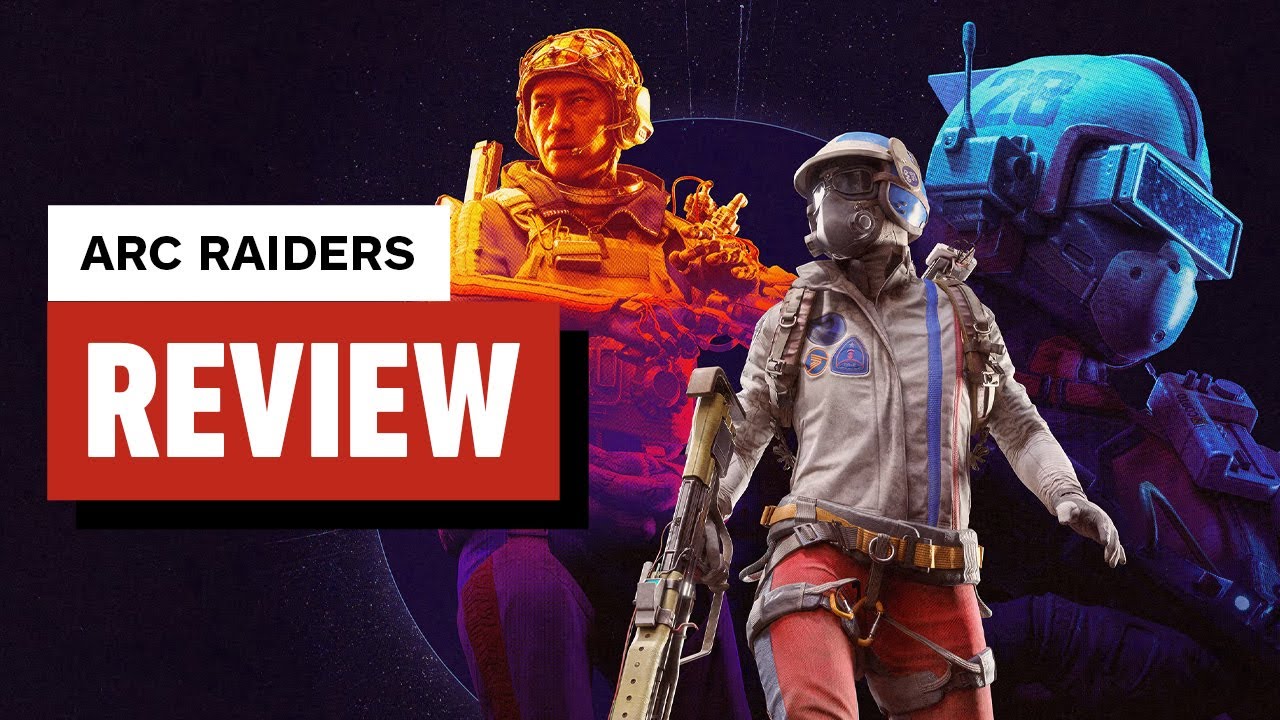
ARC Raiders Review – The Co-Op Extraction Shooter Everyone Is Talking About

watch 2 weeks

As people who work on multiplayer games for a living, we tend to be cautious with praise. Genres develop habits. Extraction shooters especially carry a reputation for being punishing, opaque, and unwelcoming unless you are already invested. ARC Raiders does exactly the opposite.

From the first few runs, ARC Raiders sets expectations through play rather than explanation. You learn quickly what you are risking, what you can afford to lose, and how situations spiral when you stay too long or push too far. Outcomes feel tied to choices you made along the way, not to hidden rules or sudden surprises. The tension comes from deciding when to commit and when to walk away.

So when ARC Raiders won Best Multiplayer at The Game Awards in December 2025, it felt like recognition of a game that knows what kind of experience it wants to deliver and executes on it consistently.

As a studio that collaborated on the project, we are proud to have played a part. As developers and players, we also think ARC Raiders earns the attention it is getting.

ARC Raiders Holds Up After Dozens of Hours

One of the most common sentiments from reviewers is how well ARC Raiders holds attention over time. Players often mention being just as engaged deep into their playtime as they were at the start, which is not a given for this genre.

That impression is backed up by player data. According to Sensor Tower, ARC Raiders shows an average playtime of 64.1 hours, with a median playtime of 34.1 hours. Those numbers suggest that a large portion of the player base is not just sampling the experience, but committing to it over many sessions.

Part of this comes down to how recovery works after a loss. Losing gear is costly, but players are given practical ways to get back into the game. Free loadouts, crafting, vendor purchases, and steady character progression mean that a single successful run can meaningfully rebuild your setup. Reviewers often describe this structure as making losses feel manageable rather than terminal, which helps sustain longer-term play.

Gunfights Feel Stressful for the Right Reasons

A lot of player praise around ARC Raiders centers on how combat feels once the stakes are high. One Steam reviewer, writing after more than 40 hours of playtime, described every mission as carrying “real tension,” shaped by uncertainty rather than constant action.

That tension comes from uncertainty rather than constant fighting. The reviewer describes each drop as carrying excitement and fear at the same time, where you never quite know how an encounter will resolve. Choosing when to move, when to engage, and when to back off becomes part of every mission.

The same review points out that combat is not always the default outcome. Despite the risk of betrayal, players often choose cooperation, especially when the stakes are high. That possibility reshapes how encounters play out, making judgment and restraint as important as technical skill.

For many players, that balance is the appeal. Gunfights are intense without being constant, and when they happen, they feel earned.

Progression That Encourages “One More Run”

In a detailed Steam user review of ARC Raiders, the player describes how quickly the game settled into a repeatable rhythm, even when runs ended badly:

💬

“I found myself thinking ‘just one more run’ more times than I expected.”

The review points to progression as a major reason. Advancement is not tied only to successful extractions. Experience continues to accumulate even after failure, which changes how losses feel over time.

💬

“There’s a skill tree. You earn XP if you extract and even if you don’t, you still get XP, so you’re always progressing in some way.”

The same Steam review also comments on how gear progression avoids creating a steep divide between new and experienced players. Stronger weapons exist, but they do not decide outcomes on their own.

💬

“Better guns are better, but it’s never the reason you win or lose a fight.”

Crafting and upgrading extend that sense of continuity between runs. Materials recovered during expeditions can be turned into new equipment or upgrades back at base, which gives players options even after losing valuable gear. Taken together, we can positively say that the progression system supports continued play by rewarding time and familiarity rather than erasing progress after a single loss.

IGN Praises ARC Raiders’ Longevity, Progression, and Player Dynamics

ARC Raiders Review

IGN points to ARC Raiders’ ability to remain engaging well beyond the early hours as one of its biggest strengths. The reviewer frames long-term enjoyment as the real test of a multiplayer game and notes that ARC Raiders continues to deliver that experience deep into extended playtime. Rather than relying on novelty, IGN credits the game for executing the extraction formula with consistency, calling it one of the most complete versions of the genre to date.

IGN also praises how progression supports that longevity. Free loadouts, crafting, upgrades, and vendor purchases give players practical ways to recover after losses, which helps sustain engagement without removing risk. According to the review, even after losing valuable gear, a single strong run can meaningfully restore your position, making repeated play feel worthwhile over time.

Player interaction is another area IGN responds positively to. The review notes that solo encounters often involve cooperation rather than immediate conflict, while group queues allow for more aggressive play when players seek it out. This balance between tension and restraint is presented as a key reason ARC Raiders feels approachable without losing the pressure expected from an extraction shooter.

Our Role as Co-Developers

We worked on ARC Raiders as part of the co-development effort at Devoted Studios, collaborating closely with Embark Studios.

Our contributions focused on UI, engineering support, and performance-related work. The goal was to reinforce clarity and reliability across the experience. In a game built around consequence, small details make a measurable difference in how players read situations and trust the game to behave as expected.

Being part of a project that reached this level of recognition and seeing ARC Raiders go on to win Best Multiplayer at The Game Awards made that work especially meaningful. Being part of a project where that level of care resonated so strongly with players and the industry is something we’re genuinely proud of.

Need a Co-Development Partner for Multiplayer Games?

ARC Raiders shows how great multiplayer games are built through close collaboration, careful execution, and attention to the details players feel every session. If you’re developing a live or multiplayer game and need a partner who understands systems, UI, and performance at scale, we’d love to talk.

Talk to Devoted Studios

24.04.2026

The Real Cost of Scope Creep in Game Development (and How to Stop It)

watch 2 weeks

One of the quickest ways to stop production in game development is scope creep.

A small feature adjustment here. A “quick” UX improvement there. A late publisher request for a new platform. Suddenly your team is overworked, budgets are growing, and deadlines are slipping.

Game development has never been more demanding, and the risks behind scope creep have never been more expensive. For producers, PMs, CEOs, and indie developers, scope creep in game development creates big operational risks that impact quality, morale, and financial runway. This is where strong game project management makes the difference and why studios now see scope creep as a major game development risk mitigation priority.

Understanding how and why it happens is the first step in preventing it. The next step is building the structures, clarity, and support your team needs to keep production healthy from start to finish.

Now let’s start talking about it (re: scope creep)

What Scope Creep Looks Like in Game Development

Scope creep refers to the gradual expansion of features or requirements beyond what was originally planned. It often results in missed deadlines, rising costs, reduced quality, and team burnout.

To be honest, scope creep is the most common management failure in game development management, and it tends to show up in some other familiar ways:

  • A feature defined loosely in pre-production turns into ten micro-features during implementation.
  • Animations or effects need polishing far beyond the initial plan.
  • A publisher tests the build and asks for major UX adjustments.
  • Engineering discovers tech debt that shifts the entire schedule.

Teams tend to underestimate the impact of “small changes.” In practice, even a minor addition can require new art, UI, animation, balancing, QA, and engineering support. Which can impact the entire pipeline.

What Causes Scope Creep in Game Development

Scope creep doesn’t happen because teams lack discipline or passion, it happens because game development is complex, interconnected, and constantly evolving. Even small decisions can send ripples through an entire pipeline. Most of the causes come down to unclear boundaries, external pressure, or changes made faster than teams can absorb them.

Understanding why scope creep happens is the first step to stopping it. These are the patterns we see most often inside real production environments:

Lack of Clear Pre-Production

When features, systems, and pipelines are not defined clearly, production teams start guessing. Guessing creates rework, and rework multiplies cost.

Clear scoping is not about locking creativity. It is about creating enough definition so that everyone understands the boundaries.

Stakeholder and Publisher Pressures

Scope creep often comes from outside the studio.

Publishers and executives can introduce late stage requests that ripple across every department. This is especially true when milestone definitions are vague. As Brandon Huffman noted in our Speak Easy episode, vague milestones open the door for subjective rejections that force teams to redo work they already completed.

As Brandon Huffman explained in our Speak Easy episode (and as we covered in our 5 Hidden Clauses in Publishing Contracts breakdown), vague milestones give publishers the ability to reject deliveries based on subjective opinions, not objective criteria.

That creates a chain reaction: teams redo work they already completed, timelines slip, and scope expands without anyone formally acknowledging it.

Reactive Design Changes

Iteration is part of game development. But reactive changes without proper review or impact assessment cause cascading delays.

Changing a mechanic often means changing animations. Which means revisiting VFX. Which forces engineering fixes. It is never just one thing.

The Cost of Scope Creep for Game Studios

Scope creep in game development can cost a studio fortunes.

While the impact is rarely isolated, one change in scope can affect an entire milestone. A few changes can destabilize a whole roadmap. And for many studios, the consequences are more than operational. They can determine whether a project ships on time, or ships at all.

Here’s what scope creep really costs game development teams:

Production Timeline Blowouts

A two week delay rarely stays a two week delay. Once a task is pushed, it affects every dependent task. Teams rush. QA falls behind. Integration slows.

Suddenly an entire quarter slips. And for smaller studios, a slip in schedule can be existential. A nightmare for studios without strong game project management systems!

Budget Burn and Lost Runway

When scope expands, budgets expand. New art. More engineering time. Extended QA. Updated builds. Additional feedback cycles.

When scope changes frequently, many teams underestimate how quickly the burn rate increases.

This means, you might still deliver the game, but you might not have enough runway left to support launch.

Teams Burn Out

Scope creep in game development is one of the top contributors to crunch and burnout. When priorities constantly change, teams feel like they are starting over. Morale drops. Quality drops with it.

Quality Loss and Technical Debt

Rushed changes lead to hacks. Hacks become tech debt. Tech debt becomes unstable in the build.

Fixing it later costs more than doing it right from the start.

Worst Case Scenario: Cancellations

The industry has seen numerous high-profile projects delayed, rebooted, or cancelled because scope expanded faster than teams could support. Feature additions, system redesigns, and shifting creative goals can stack up until schedules become unmanageable. When production load grows beyond capacity, even well-funded teams struggle to keep the project stable.

How to Stop Scope Creep Early

Stopping scope creep is more about knowing how to create enough structure to keep teams aligned as ideas evolve.

The sooner guardrails are in place, the easier it is to absorb changes without derailing timelines, budgets, or morale. These practices help studios stay flexible without losing control.

Here’s how teams can keep scope in check from the start:

Define Scope Like a Contract

A feature description is not enough. Strong scope definitions include:

  • User stories or gameplay intent
  • Acceptance criteria
  • Technical constraints
  • Art style references
  • Out of scope statements

If a feature is vague, everyone will interpret it differently.

Use Formal Change Requests

Any change (regardless of size) must follow documentation and approval.

  • What is being changed
  • Why the change is necessary
  • Cost impact
  • Timeline impact
  • Resource impact

If studios skip this step, additions stack quietly and invisibly.

Set Boundaries with Stakeholders

Producers and leads must feel empowered to say:

“This feature will extend the timeline by X days.”

“This scope addition requires Y more resources.”

Without boundaries, scope increases endlessly.

Involve Producers Early and Often

Producers cannot prevent scope creep if they are brought in after decisions have been made. They need visibility at the moment scope is adjusted.

Quote avatar

This is exactly how our producers operate!

Meet Carol, Lead Producer at Devoted Studios. She told us how early involvement and clear communication help prevent small issues from turning into production-wide problems. Her approach, like spotting risks early, clarifying feedback, and keeping everyone aligned is what keeps scope controlled and teams moving confidently.

Strong producers are not just project managers. They’re the buffer between creative ambition and production reality. Bringing them into conversations early is one of the most effective ways to stop scope creep in game development before it starts.

How Co-Development Helps Reduce Scope Creep

Teams working with high ambition and limited internal bandwidth are the most exposed to scope creep. Co-development solves many of the structural causes.

A strong co-dev partner contributes in three major ways:

Clear Scoping & Pre-Production Support

A strong co-dev team helps you slow down before you speed up. Before any work begins, co-dev teams help clarify features, write missing details, flag anything that might cause rework, and help define what “done” really looks like so surprises don’t show up mid-production.

Flexible Resourcing

Building a bigger team isn’t always the answer. When scope creeps in, what you really need is the right people at the right moment.

  • art
  • animation
  • engineering
  • tech art
  • UI
  • VFX

Instead of scrambling to hire or overloading your core team, you plug in specialists only when you need them. Production stays steady, your team stays sane, and you avoid the chaos of reshuffling roles just to catch up.

Devoted Studios’ “strike teams” are custom, flexible teams of game development professionals assembled to tackle specific project needs, like art production, co-development, and porting.

Our expert teams provide game studios with the scalable talent required to complete projects efficiently, offering a flexible extension of the studio’s own team and managing projects across various platforms, engines, and time zones.

Our expert teams provide game studios with the scalable talent required to complete projects efficiently, offering a flexible extension of the studio’s own team and managing projects across various platforms, engines, and time zones.

Structured Milestone Management

A co-dev partner works with documented milestones, acceptance criteria, and change request processes, creating consistency and accountability that internal teams often struggle to maintain during peak pressure.

Devoted Studios works as a trusted and reliable co-development partner for studios facing rising scope demands. Our co-dev workflow is designed to stabilize scope, support teams, and prevent production drift through:

  • Detailed pre-production planning
  • Clear feature and asset scoping
  • Strict milestone tracking
  • Structured communication
  • Rapid reinforcement across art and engineering
  • Flexible resourcing without long-term overhead

But what differentiates Devoted Studios, and why many studios list us among the best co dev game studios they’ve worked with is our ability to plug into any production environment and make it stronger. Teams don’t just get extra hands. They get a co-dev partner that brings clarity, structure, experienced leadership, and production discipline that reduces risk instead of adding to it.

And for years, we have been supporting and working with game studios of all sizes to help them stay ahead of scope creep while keeping production quality consistent, predictable, and stress free.

Co-create With Devoted Studios!

If your roadmap is growing faster than your team can handle, you don’t need to fight scope creep alone. Devoted Studios integrates directly into your pipeline with specialized art, engineering, and production support that keeps your game on schedule and your team protected.

Let’s Talk!

14.04.2026

How to Choose a Game Porting Company in 2026

watch 3 weeks

First-submission certification. Five platforms at once. Here’s what that actually takes.

Most porting disasters don’t start at certification. They start at the vendor selection call, when a studio picks a partner based on a low quote and a vague portfolio — and doesn’t find out what that means until three months before launch.

Game porting in 2026 is a different discipline than it was five years ago. Switch 2, PS5, Xbox Series X/S, and the continued fragmentation of PC storefronts mean that a port isn’t just a technical adaptation — it’s a full production workstream with platform-specific requirements, certification processes, performance budgets, and UI overhauls that can take as much time as the original game took to build.

Choosing the right porting company changes that outcome. This guide covers what to actually evaluate — not what sounds good on a capabilities page.

What “Porting Experience” Actually Means — and How to Test It

Every studio claims porting experience. The question is what kind, on what platforms, and at what scale.

There are three tiers of porting complexity that separate studios who can handle the work from studios who’ve only handled part of it.

Tier 1 — Single-platform ports. A studio ports one version of a game to one new platform. This is the most common engagement, and the most common place where experience claims get inflated. Porting an indie Unity title to Nintendo Switch is real work — but it doesn’t prepare a team for simultaneous multi-platform certification on a 60-hour Unreal Engine RPG.

Tier 2 — Multi-platform simultaneous porting. This requires parallel team management, platform-specific build pipelines, and the ability to handle divergent certification feedback from multiple first parties at the same time. Studios that have done this repeatedly operate differently — their pipelines are built for it.

Tier 3 — Porting with co-development scope. Some ports require more than adaptation. When a game ships on a new platform with new DLC, expanded content, or UI rebuilt from scratch, the porting studio needs co-development capability alongside pure porting expertise. Very few studios operate at this level cleanly.

When evaluating a porting partner, ask them directly: which tier describes the majority of their work? What was the largest simultaneous platform scope they’ve managed? What was their first-submission certification rate?

Devoted Studios ported Risk of Rain 2 (Gearbox Software) to 5 platforms simultaneously — Xbox, Switch, and PlayStation — achieving first-submission certification across all platforms while handling network integration, rendering optimization, and DLC support in parallel. That’s Tier 2 operating at full scale.

The Certification Question Nobody Asks Early Enough

Platform certification — TRC for Nintendo, TCR for Microsoft, TRC for Sony — is where ports live or die. A failed certification submission adds weeks to a launch window, compresses marketing timelines, and creates downstream problems for digital storefronts already scheduled around your release date.

First-submission certification pass rates are one of the most meaningful metrics a porting studio can give you. It reflects how well they understand platform requirements before they submit, how thoroughly their QA process catches platform-specific issues, and how experienced their team is with the specific hardware they’re targeting.

Studios that routinely require two or three submission rounds aren’t necessarily bad — but they’re building that rework time into your schedule whether you know it or not.

What to ask:

  • What is your first-submission pass rate by platform over the last 12 months?
  • How do you handle certification feedback when submissions fail?
  • Do you have relationships with first-party developer relations teams?
  • Can you share examples of certification documentation from previous projects?
  • A studio that can’t answer these questions specifically hasn’t done enough certification work to give you confidence. A studio that answers them with named titles and documented outcomes has.

Engine Expertise Is Not the Same as Porting Expertise

A studio that builds games in Unreal Engine is not automatically qualified to port an Unreal Engine game to Nintendo Switch. The skills overlap — but porting requires a specific layer of platform-side knowledge that pure development work doesn’t always build.

For Unreal Engine ports specifically: memory management on Switch requires aggressive optimization work that differs substantially from PC or console development. Draw call budgets, texture streaming, shader compilation — each platform has its own ceiling, and hitting those ceilings late in production creates crunch.

For Unity ports: the engine’s cross-platform tooling helps, but platform-specific rendering paths, input system overhauls, and store integration requirements (Nintendo eShop, PlayStation Network, Xbox Game Pass) all require hands-on experience with each certification environment.

What to check:

Ask the studio which version of Unreal or Unity the game you’re working on uses, then ask them how many titles they’ve shipped on that version for your target platforms. Not “we know Unreal Engine” — how many shipped titles, which platforms, which versions.

Devoted Studios has shipped porting engagements across both Unreal Engine and Unity at production scale — including Risk of Rain 2 (Unity, 5 platforms), FNAF: Secret of the Mimic (Unreal Engine, PS/Xbox/Switch/PC), FNAF: Security Breach (Unreal Engine, Switch, PS4/PS5, Xbox), and Open Roads (Unity, Switch with 30fps optimization and scene dressing). Each engagement required platform-specific expertise, not just engine familiarity.

Parallel Porting vs. Sequential — Why the Difference Costs You Money

Most studios default to sequential porting: finish the PC version, then port to PS5, then Xbox, then Switch. This approach feels safer but creates a compounding timeline problem.

Each sequential port starts a new certification clock. Marketing plans built around a single launch window get stretched. The team managing platform feedback has to context-switch between build states. If Switch certification fails, it pushes back a release that PS5 and Xbox are already ready for.

Parallel porting — working on all target platforms simultaneously — requires more coordination upfront but produces a single certification window, a single launch date, and a single marketing moment. It’s faster, cheaper over the full production cycle, and lower risk for the launch itself.

The requirement is a porting studio with the team depth and pipeline infrastructure to run parallel builds without quality degradation. That’s not every studio.

Devoted Studios managed simultaneous 5-platform porting for Risk of Rain 2 — all platforms in parallel, all certifications submitted within the same window, first-submission pass across the board.

Quote avatar

“Devoted has been an absolute force multiplier for our development needs. On top of being generally great people to work with, they’re communicative, transparent, and always deliver on their commitments. Devoted cares about the quality of what’s being shipped just as much as we do which has led to a deep trust on our side.”

— Ray McCaffrey, Chief Development Officer, Steel Wool Studios

The Studios Worth Knowing in 2026

The porting market has specialists worth considering across different project types and scopes. Here’s an honest breakdown of where different studios play best.

Devoted Studios (US) handles game porting across Unreal Engine and Unity with first-submission certification track record and simultaneous multi-platform delivery. Credits include Risk of Rain 2 (5 platforms, first-submission cert), FNAF: Secret of the Mimic, FNAF: Security Breach, FNAF: Help Wanted 2 (VR porting — Meta Quest to Pico Neo 3 and Pico 4), Sunderfolk, and Open Roads. Best for: multi-platform simultaneous ports, Unreal and Unity titles, projects that also need co-development or DLC support alongside porting.

Iron Galaxy Studios (US) is known for console porting and live operations, with credits including Killer Instinct and Doom Eternal. Best for: complex AAA console ports where performance and gameplay preservation under hardware constraints is the primary concern.

Abstraction Games (Netherlands) has a long track record on multiplatform ports including Hotline Miami and ports for major publishers. Best for: studios looking for European timezone alignment with established porting pipeline experience.

Tantalus Media (Australia) specializes in Nintendo ports and remasters, including work on The Legend of Zelda: Twilight Princess HD. Best for: Nintendo-first porting projects or remasters targeting the Switch ecosystem.

Snapbreak / independent boutique porting studios — Smaller studios with niche platform specialization. Best for: indie titles with simpler scopes where a focused single-platform team is more cost-effective than a full multi-platform operation.

Six Questions to Ask Before You Sign

The conversation before a contract tells you more about a porting studio than their portfolio page. Here are the questions that reveal the most.

1. Can you name your last three porting projects, the platforms, and your certification outcome? Any studio with real porting experience can answer this in 30 seconds. Vague answers here are a signal.

2. What’s your process when a certification submission fails? Failure happens. What matters is whether the studio has a documented escalation process, dedicated platform relations contacts, and a resubmission workflow that doesn’t require starting from scratch.

3. How do you handle scope changes mid-porting? Porting scopes shift — new DLC gets added, platform requirements update, the source build changes. How a studio handles that reveals whether they operate as a true production partner or a task-fulfillment shop.

4. What does your QA process look like specifically for platform certification prep? Pre-cert QA for console platforms is a distinct discipline. Ask specifically, not generally.

5. Can you support post-launch DLC porting and live updates? Many porting engagements don’t end at launch. Studios that can stay embedded through the live service period are significantly more valuable than studios that hand off at gold.

6. What’s your communication cadence during active porting work? Weekly build reports, milestone reviews, daily standups during cert — ask what’s standard, what’s available, and what they’d recommend for your project scope.

Why Porting Timing Matters More Than Porting Budget

The single most expensive porting decision isn’t the studio you choose — it’s when you bring them in.

Studios that engage a porting partner after content lock are starting a process that could have been running in parallel for months. The porting team has to audit a finished build, identify platform-specific problems that were baked in during development, and rework systems that were never designed with console constraints in mind.

The cleaner approach: bring your porting partner in during late production, before content lock. They can flag platform-specific issues in real time, advise on memory budgets and draw call limits while there’s still room to fix them, and begin platform-specific build work before the source version is final.

This is especially true for Switch 2 and PS5 ports, where the gap between PC development defaults and console performance requirements can be significant — and where catching problems at the source saves weeks at certification.

Devoted Studios’ porting team can engage at any production stage — but the most efficient engagements are the ones that start before the source game is locked. Talk to the porting team early.

Quote avatar

“We definitely had an enjoyable time working with Devoted. Their team is very professional, quick, and detailed with their work on the project. We appreciated it during our porting process from Quest to Neo 3, Pico 4, and our upcoming headset.”

— Justin Molyneaux, Director of Pico XR Dev Relations and Partnerships, ByteDance

The Right Partner Ships Once

Porting is one of the highest-leverage decisions in a game’s commercial life. A title that ships on three platforms instead of one reaches a fundamentally different audience. A port that achieves first-submission certification ships on the planned date. A port handled by a team with real platform experience doesn’t create the six-week delay that kills a launch window.

The studios worth working with in 2026 have named titles, documented certification outcomes, and teams built for the specific complexity of your project. The ones that don’t are cheaper upfront and more expensive before it’s over.

If you’re evaluating porting partners for an upcoming Unreal Engine or Unity title — across Switch 2, PS5, Xbox, or PC — Devoted Studios’ porting team works across simultaneous multi-platform delivery, first-submission certification, and post-launch DLC support.

Co-create with Devoted →

<svg class="svg-icon" width="16" height="16" aria-hidden="true" role="img" focusable="false" xmlns="http://www.w3.org/2000/svg" viewBox="0 0 24 24"><defs><path id="a" d="M0 0h24v24H0V0z"></path></defs><clipPath id="b"><use xlink:href="#a" overflow="visible"></use></clipPath><path clip-path="url(#b)" d="M12 2C6.5 2 2 6.5 2 12s4.5 10 10 10 10-4.5 10-10S17.5 2 12 2zm4.2 14.2L11 13V7h1.5v5.2l4.5 2.7-.8 1.3z"></path></svg><time class="entry-date published" datetime="2026-04-14T10:09:34+03:00">14.04.2026</time><time class="updated" datetime="2026-04-14T10:09:51+03:00">14.04.2026</time>Posted inAll content
07.04.2026

Best game co-development partners in 2026

watch 4 weeks

Named credits only. No pitch decks. No portfolio pages.

The co-development market is noisy. Every studio claims AAA experience, flexible teams, and seamless integration. Very few can name the game, the engine, the platform, and the year. That gap — between what a studio claims and what it can prove — is where projects get into trouble.

In 2026, game co-development has shifted from “nice to have” to structural. Studios like Obsidian, Embark, Dreamhaven, and Steel Wool ship titles they couldn’t build alone — not because their teams lack talent, but because co-development partners handle production volume, platform complexity, and specialist disciplines that would otherwise stall a release. The question isn’t whether to bring in a partner. It’s which one can actually do the work.

This list focuses on studios with verifiable shipped credits — named games, named roles, named platforms. No generics.

4 Years, 2 Obsidian Games, 0 Missed Milestones

Devoted Studios is a US-headquartered game development and art production partner with 250+ core team members across 15+ countries. Founded in 2018, the studio has shipped 250+ projects across co-development, porting, engineering, and end-to-end art production.

The leadership team brings direct AAA experience into every engagement. Studio Art Director Ryan Lastimosa is a Respawn Entertainment veteran — Apex Legends, Titanfall, Call of Duty 4. Executive Creative Director Jason Millena has credits on Game of Thrones: Beyond the Wall, Jurassic World: Primal Ops, The Lord of the Rings: Heroes of Middle-earth, and RuneScape. CTO Flavius Alecu brings a technical background spanning Red Dead Redemption 2, GTA V, and PS5 platform work.

Selected co-development credits:

  • Avowed (Obsidian Entertainment) — A 4-year partnership covering end-to-end environment art production and 3D character creation on Unreal Engine for PC and Xbox. The longest continuous engagement in DS history, running across multiple production phases.

  • The Outer Worlds 2 (Obsidian Entertainment) — In-game and cinematic lighting, 3D character creation. Shipped October 2025 on Unreal Engine for PC and Xbox.
  • Arc Raiders (Embark Studios) — Co-development including UI engineering, gameplay features, and performance optimization on Unreal Engine across PS, PC, and Xbox.
  • FNAF: Secret of the Mimic (Steel Wool Studios) — Co-development, porting, UI engineering, gameplay engineering, 3D tech art, and art production on Unreal Engine across PS, Xbox, Switch, and PC.
  • Sunderfolk (Dreamhaven) — Co-development, porting, technical art, platform certification, engineering, and UI integration on Unity across PS, Xbox, and Switch.
  • Palia (Singularity 6) — Co-development covering engineering, tools and UI, and meta-game features on Unreal Engine across PC, Switch, PS, and Xbox.
Quote avatar

“Devoted has been an absolute force multiplier for our development needs. They’re communicative, transparent, and always deliver on their commitments. Devoted cares about the quality of what’s being shipped just as much as we do – which has led to a deep trust on our side.”

— Ray McCaffrey, Chief Development Officer, Steel Wool Studios

Devoted Studios is best suited for studios that need a long-term embedded partner — one that owns milestones, integrates into existing pipelines, and scales across disciplines without requiring constant direction.

→ See co-development services

The Studios That Own a Lane — and Stay In It

Not every project needs a full-service co-dev partner. Some productions need a specialist in a narrow, high-stakes discipline. The studios below have carved out credible positions in specific service areas — and deliver well within those lanes.

Blind Squirrel Games (US) focuses on AAA co-development, remasters, and live service support. Credits include Bioshock: The Collection and Borderlands 3 expansion work. Strong fit for remaster projects or studios that need embedded engineering support with North American time zone alignment.

Iron Galaxy Studios (US) specializes in game porting and live operations, with credits on Killer Instinct and Doom Eternal. Well-suited for studios handling platform certification complexity or needing a porting team with deep console expertise.

Lemon Sky Studios (Malaysia) delivers high-end 3D game art with credits on Assassin’s Creed Valhalla and Street Fighter 6. A strong choice for art production volume — environments, characters, cinematic assets — where visual fidelity is the primary requirement.

Moonmana (Europe/Ukraine) handles full-cycle development and has experience on both the production and publishing side of game development. Their dual background gives them practical insight into live game lifecycles. Best for mid-sized projects needing development continuity through post-launch.

iLogos Game Studios (Europe) focuses on mobile co-development, porting, and live service support. A reliable option for studios extending a title to mobile or maintaining content cadence on existing live games.

What “Co-Development” Actually Means — and What It Doesn’t

The term gets used to describe everything from a 5-person art task team to a 100-person embedded production unit. That ambiguity creates real problems during scoping — and during production.

Genuine co-development means the external team shares ownership of the outcome, not just the workload. They attend milestone reviews. They flag risks before they become delays. They understand the game’s production context well enough to make decisions without being managed at the task level.

What it isn’t: a body shop with a co-dev label. Studios that operate in pure output mode — receive brief, deliver asset, wait for next brief — can be useful for volume work, but they’re not co-development partners. The distinction matters most under pressure: when the scope shifts, the timeline compresses, or a platform requirement changes mid-production.

The clearest signal of a genuine co-dev partner is longevity. Multi-year engagements don’t happen by accident. They happen because the partner integrated, adapted, and kept delivering when things got complicated.

Devoted Studios’ 4-year Avowed partnership with Obsidian Entertainment — spanning multiple production phases across environment art and character creation — is the kind of engagement that only works when the external team operates as an extension of the internal one, not as a separate vendor.

→ Learn how Devoted Studios approaches co-

The Porting Question Everyone Asks Too Late

Most studios think about porting after the core game is done. That’s usually the wrong time to start.

Platform certification — particularly for Nintendo Switch, PS5, and Xbox — has technical requirements that are significantly easier to meet when they’re considered during production, not retrofitted afterward. Memory constraints, input handling, performance budgets, and platform-specific UI all create rework when they’re treated as post-launch problems.

Devoted Studios ported Risk of Rain 2 (Gearbox Software) to 5 platforms simultaneously — Xbox, Switch, and PlayStation — achieving first-submission certification and handling network integration and DLC support across all versions. That outcome doesn’t happen by starting at the end of the production cycle.

For studios evaluating porting partners, the right question isn’t “can you port our game?” It’s “when do you need to be embedded for the port to ship clean?”

→ See Devoted Studios’ porting

How to Pick the Right Co-Dev Partner for Your Project

The evaluation process matters more than most studios acknowledge. A wrong fit discovered at month three costs more than a careful selection process at month zero.

Start with credits, not claims. Any studio worth talking to should be able to name the game, describe their role, and tell you the platform and engine. Vague portfolio pages with “AAA experience” and no titles are a signal worth noting.

Match the engagement model to your production structure. Some studios work best on defined deliverable scopes — X assets by Y date. Others integrate into your sprint cadence, attend stand-ups, and own a section of the project. Know which one your production needs before you start the conversation.

Ask about their longest engagement. Short-term projects are easier to deliver well. Multi-year partnerships require a different level of operational alignment — communication rhythms, escalation paths, scope change management, and production culture compatibility. The answer tells you something real.

Check platform certification history. For any project that ships on console, first-submission certification rates matter. Studios that routinely require multiple certification submissions add time and cost to every porting cycle. Ask directly.

Evaluate communication before you sign. The responsiveness, clarity, and specificity of a studio’s communication during the evaluation phase usually predicts their communication during production. Slow, vague, or over-promising during the pitch is a data point.

Quote avatar

“The Obsidian team has been completely satisfied with Devoted Studios’ performance in all aspects – art quality, time management, adherence to style and timeline, communication quality control. Devoted does an excellent job and never hesitates to run the extra mile to guarantee the best outcome.”

— Chris Naves, Lead Art Outsourcing Manager, Obsidian Entertainment

The List Is Shorter Than You Think

The game development co-production market has hundreds of studios and a handful of genuine partners. The difference shows up in the credits — which titles shipped, on which platforms, with which teams, over how long.

In 2026, the studios worth calling are the ones that can answer those questions directly. No pitch decks required.

If you’re evaluating co-development partners for an upcoming production on Unreal Engine or Unity, Devoted Studios works across co-development, game porting, end-to-end art production, and engineering — with credits on Avowed, Arc Raiders, FNAF: Secret of the Mimic, Sunderfolk, and Risk of Rain 2.

Co-create with Devoted →

<svg class="svg-icon" width="16" height="16" aria-hidden="true" role="img" focusable="false" xmlns="http://www.w3.org/2000/svg" viewBox="0 0 24 24"><defs><path id="a" d="M0 0h24v24H0V0z"></path></defs><clipPath id="b"><use xlink:href="#a" overflow="visible"></use></clipPath><path clip-path="url(#b)" d="M12 2C6.5 2 2 6.5 2 12s4.5 10 10 10 10-4.5 10-10S17.5 2 12 2zm4.2 14.2L11 13V7h1.5v5.2l4.5 2.7-.8 1.3z"></path></svg><time class="entry-date published" datetime="2026-04-07T11:33:47+03:00">07.04.2026</time><time class="updated" datetime="2026-04-07T11:33:51+03:00">07.04.2026</time>Posted inAll content
07.04.2026

Top Game Development Companies in USA 2026

watch 4 weeks

Not the biggest. The ones that actually ship.

Picking a game development partner in 2026 is less about finding someone who can do the work and more about finding someone who will own it. Studios that take a scope, hit milestones, communicate when something breaks, and are still at the table at cert – that’s a shorter list than the marketing landscape suggests.

This list focuses on US-based and US-led studios that have actual shipped credits – games on platforms, verifiable roles, clients who came back. It’s weighted toward co-development and porting because that’s where the real production risk lives. Art vendors are a separate category.

Devoted Studios leads this list because this is Devoted Studios’ blog. But the other entries are genuinely worth knowing – studios in adjacent niches doing strong work for clients Devoted typically isn’t competing for.

1. Devoted Studios – Co-Development, Porting & End-to-End Art Production

Devoted Studios was founded in 2018 with a specific thesis: studios building complex games need partners that embed into the pipeline, not vendors that execute tasks from the outside. Seven years later – 250+ core team, 15+ countries, 90+ clients, 250+ projects shipped – that model has held across some of the most demanding productions in the industry.

Four Years With Obsidian. Two Shipped Titles. Zero Resets.

The Obsidian partnership is the most telling credential on the list. On Avowed (PC/Xbox), Devoted ran end-to-end environment art production, 3D character creation, and concept art across a four-year engagement. On The Outer Worlds 2 – shipped October 2025 on PC and Xbox – the team delivered in-game lighting, cinematic lighting, and 3D character creation. Two consecutive major Obsidian releases. Same partner. No handoff, no ramp-up, no reset between projects.

Arc Raiders, Steel Wool, Gearbox – the Rest of the Sheet

On Arc Raiders (Embark Studios), Devoted co-developed gameplay systems, owned UI engineering, built gameplay features, and drove performance optimization across PlayStation, PC, and Xbox – all on Unreal Engine, all embedded inside Embark’s sprint structure.

Steel Wool Studios worked with Devoted across three FNAF titles: Security Breach, Help Wanted 2, and Secret of the Mimic. Porting, co-development, UI engineering, gameplay engineering, 3D tech art, art production – across consecutive releases on a franchise where the community notices every detail. Steel Wool’s CDO described Devoted as ‘an absolute force multiplier.’ His studio came back three times.

Risk of Rain 2 (Gearbox Software): five platforms, ported simultaneously, first-submission certification. The Switch and Switch 2 porting practice at Devoted is one of the most developed in the current US market.

The Team

Ryan Lastimosa (Studio Art Director) – formerly Respawn Entertainment, credits on Apex Legends, Titanfall, and Call of Duty 4. Flavius Alecu (CTO) – credits on Red Dead Redemption 2, GTA V, and PS5 platform work. Jason Millena (Executive Creative Director). People who’ve shipped at the highest level, now building the teams that do it here.

Quote avatar

“Devoted has been an absolute force multiplier for our development needs. They’re communicative, transparent, and always deliver on their commitments. Devoted cares about the quality of what’s being shipped just as much as we do – which has led to a deep trust on our side.”

— Ray McCaffrey, Chief Development Officer, Steel Wool Studios

  • Engine depth: Unreal Engine (UE4/UE5), Unity, proprietary
  • Credits: Arc Raiders (Embark), Avowed + The Outer Worlds 2 (Obsidian), FNAF series (Steel Wool), Risk of Rain 2 (Gearbox), Sunderfolk (Dreamhaven)
  • Best for: Multi-discipline co-development, Unreal/Unity, console porting, Switch/Switch 2, end-to-end art
  • Team: 250+ core · scales per engagement · leadership from Respawn, Rockstar, Sony

→ Co-development services · Porting services · End-to-end art production

Other US Game Development Studios Worth Knowing in 2026

These studios were selected for depth in specific niches – each strong in areas where the client profile or production type doesn’t overlap significantly with Devoted’s core work.

Certain Affinity – Multiplayer Systems Specialists

Austin, Texas-based studio with a deep specialization in multiplayer game development and co-development. Known for work on Halo, Age of Empires, and Left 4 Dead. Certain Affinity operates primarily at the AAA multiplayer tier – systems engineering, live service architecture, and online gameplay features. Strong fit for publishers running large-scale multiplayer titles who need a specialist co-dev partner for the networking and systems layer specifically.

Disbelief – Engineering-First Co-Development

Chicago-based engineering studio that operates almost entirely as a co-development partner rather than a full-service studio. Deep Unreal and Unity expertise with a focus on gameplay systems, tools, and performance engineering. Disbelief is built for studios that have a strong creative and art pipeline but need senior engineering capacity embedded into the team. Smaller, more agile than the large co-dev studios – suited for mid-scale productions where decision speed matters.

Abstraction Games – Porting Specialists

US-operated studio (with European roots) with a strong and specific reputation in game porting – PC, PlayStation, Xbox, and Nintendo platforms. Long track record across indie and mid-scale titles. For studios that need a dedicated porting partner with a focus on technical precision and certification discipline, Abstraction is one of the more recognized names in that specific lane.

Sunblink – Indie and Apple Platforms

New York-based studio with particular expertise in Apple platform development – Apple Arcade titles, iOS, and tvOS. For studios specifically targeting Apple’s ecosystem, Sunblink has navigated that platform’s quirks and certification requirements across multiple shipped titles. Narrow focus, genuine depth in that lane.

Mighty Bear Games – Mobile Co-Development

Mobile-first co-development studio with teams across the US and Southeast Asia. Strong on Unity, experienced with live-service mobile titles and rapid iteration. Good fit for studios building mobile-first games that need co-development infrastructure built around that stack – not a console-heavy studio retooled for mobile.

5 Questions to Ask Before You Sign Anything

1. Who’s leading the engagement – by name? Not the sales contact. The producer actually running your project. What have they shipped? Where? Seniority on the execution side is the single biggest predictor of whether the partnership works.

2. What’s their cert pass rate? For anything involving porting or platform submission, first-submission certification history is a concrete, verifiable number. Cert failure adds months. Devoted Studios’ five-platform first-submission pass on Risk of Rain 2 is a production record – not a marketing claim.

3. Can they run multiple disciplines on the same project? A studio that handles UI engineering, gameplay features, and art production simultaneously – as Devoted did on FNAF: Secret of the Mimic – has a different structural capability than one that owns a clean, narrow scope. Know which one your project needs.

4. What does their cadence actually look like? Weekly check-ins vs. milestone reviews vs. embedded standups – how a studio structures communication tells you how they think about accountability. Studios that disappear between deliverables are task vendors, whatever they call themselves.

5. What do clients say – and did they come back? Testimonials are table stakes. The real signal is repeat business. When Obsidian ran two consecutive titles through the same partner, that’s not a quote. That’s a production decision made under real pressure.

Quote avatar

“The Obsidian team has been completely satisfied with Devoted Studios’ performance in all aspects – art quality, time management, adherence to style and timeline, communication quality control. Devoted does an excellent job and never hesitates to run the extra mile to guarantee the best outcome.”

— Chris Naves, Lead Art Outsourcing Manager, Obsidian Entertainment

Start With the Credits, Not the Claims

The studios worth working with in 2026 are the ones with track records you can verify. Named games on platforms you ship to. Clients who came back. Roles specific enough to tell you something real about how the studio actually operates.

For US-led co-development across Unreal or Unity – or for Nintendo Switch 2 porting with a studio that has first-submission certification experience – Devoted Studios is the right starting point.

→ Talk to the Devoted Studios team about your project. Or explore co-development, porting, and end-to-end art production.

<svg class="svg-icon" width="16" height="16" aria-hidden="true" role="img" focusable="false" xmlns="http://www.w3.org/2000/svg" viewBox="0 0 24 24"><defs><path id="a" d="M0 0h24v24H0V0z"></path></defs><clipPath id="b"><use xlink:href="#a" overflow="visible"></use></clipPath><path clip-path="url(#b)" d="M12 2C6.5 2 2 6.5 2 12s4.5 10 10 10 10-4.5 10-10S17.5 2 12 2zm4.2 14.2L11 13V7h1.5v5.2l4.5 2.7-.8 1.3z"></path></svg><time class="entry-date published" datetime="2026-04-07T02:59:33+03:00">07.04.2026</time><time class="updated" datetime="2026-04-07T02:59:38+03:00">07.04.2026</time>Posted inAll content
05.02.2026

2026’s Top 7 Video Game Companies Dominating the Market

watch 3 months

The global games market has changed fast over the past few years. After the funding slowdown in 2023 and 2024, the industry entered 2025 with a cautious recovery and a stronger push toward profitable portfolios, smarter live service models, and more cross platform ecosystems.

Heading into 2026, a handful of companies are positioned to dominate the market. Some have scale. Others have massive IP. A few have redefined the business entirely.

Keep scrolling to take a look at the data backed list of the top video game companies expected to lead 2026, plus what actually makes them powerful!

Sony Interactive Entertainment

Sony continues to be one of the highest revenue generators globally, powered by the PlayStation ecosystem, strong PC expansion, and award winning first party titles. The company consistently appears near the top of gaming revenue rankings and performs extremely well in critical reception.

What Makes Sony Hard to Beat

  • A growing library of top tier exclusives
  • Strong live service ambitions
  • PC ports expanding total audience
  • PlayStation Plus shaping long term engagement
  • A mature global platform ecosystem

Sony continues to be one of the dominant competitors of the industry as it enters 2026 with strength from both hardware and content.

Tencent Games

Tencent has rebounded strongly after a slower period during China’s regulatory tightening. By 2025, both domestic and global game revenues were growing again, especially with major mobile hits and its broad portfolio of stakes in Western studios.

What Keeps Tencent at the Top of the Gaming Industry

  • Ownership of Riot Games and Supercell
  • Stakes in Ubisoft, Epic, Remedy, Fatshark and others
  • A mobile business still unmatched in scale
  • Heavy investment in high end real time and multiplayer projects

Tencent remains a core pillar of global gaming, influencing trends far beyond China.

Microsoft Gaming

Microsoft now operates one of the largest content portfolios in entertainment after acquiring Bethesda and Activision Blizzard. Game Pass continues to be a strategic driver for platform engagement across Xbox, PC, and cloud.

How Microsoft Stays Ahead Going Into 2026

  • A massive first party and third party content pipeline
  • Cross platform strategy across console, PC, and cloud
  • Game Pass shaping player expectations for access
  • Long term investment in AI and cloud tools for developers

Microsoft plays a central role in how games are distributed, consumed, and monetised in 2026.

Nintendo

Nintendo continues to print industry defining hits. Its evergreen franchises (Mario, Zelda, Pokémon) deliver long tail sales that outperform most modern releases.

With the arrival of the Nintendo Switch 2, the company is positioned for another major hardware cycle. Early industry reporting suggests stronger third party interest, more support for high fidelity engines, and a smoother pipeline for cross platform titles compared to the first Switch generation.

Why Nintendo Remains a Global Gaming Leader

  • Iconic global IP
  • Family friendly content with near universal reach
  • A tightly integrated hardware software model
  • High attach rates per console
  • Insulation from industry trends like live service volatility

Switch 2 is expected to energise both Nintendo’s revenue and developer demand throughout 2026, keeping the company near the top of the global market.

Electronic Arts

EA’s big titles continue to lead recurring revenue trends. Sports franchises like FIFA FC and Madden remain among the top earners. Apex Legends is still a major live service force.

A large private equity buyout has reshaped EA’s long term trajectory, making 2026 a defining year for its strategic direction.Electronic Arts’ $55 billion take-private by a consortium led by Saudi Arabia’s Public Investment Fund, alongside Silver Lake and Affinity Partners signals a major repricing of gaming assets and a change toward long term, performance driven strategy.

How EA Stays Relevant and Respected in 2026

  • Reliable live service backbone
  • Sports franchises with global annual demand
  • New ownership pushing for higher efficiency and profitability
  • Large multiplatform footprint

EA remains too big and too consistent to ignore.

Epic Games

Epic Games sits in a uniquely powerful position in 2026 because no other company controls both a top grossing live service title and the industry’s most influential game engine.

Fortnite alone is on track to generate around 6 billion dollars in revenue in 2025, solidifying it as a 40 billion dollar plus lifetime phenomenon. The game remains one of the most consistently played and monetised live service games in the world, while Unreal Engine continues to be the backbone of AAA development, indie production, virtual production, and real time film pipelines.

Why Epic’s Influence Keeps Growing

  • Unreal Engine powering AAA, indie, VR, and film
  • Fortnite evolving into a platform of its own
  • Strong creator economy tools
  • Cross media integrations across games, films, and brands

Epic is hugely influencing gaming and interactive entertainment in 2026 and beyond thanks to Fortnite’s growing economy and Unreal Engine’s dominance across industries.

Roblox Corporation

Roblox isn’t operating as a traditional game studio anymore. At RDC 2025, Roblox doubled down on their vision: capturing 10% of all global gaming content revenue. By 2026, it functions as a full scale platform (part game, part social network, part creation suite, and part digital marketplace). Its strength comes from scale and the ability to turn players into creators, creators into entrepreneurs, and brands into interactive participants.

Roblox’s ecosystem continues to grow because it doesn’t depend on a single hit title. Instead, millions of worlds, experiences, and user made games power the entire platform. The company sits at the intersection of entertainment, education, social interaction, and virtual commerce, giving it a unique position in the global games industry.

Why Roblox Matters in 2026

  • Massive DAU numbers (112 million daily active users)
  • Strong user generated content economy
  • A young audience that grows up inside the platform
  • Educational and enterprise expansion

Roblox dominates 2026 because it blends gaming, social networks, creation tools, and digital entrepreneurship into a single ecosystem. Its scale, creator economy, and ability to grow with its audience ensure it stays one of the most influential companies in the industry.

Where Devoted Studios Fits Into a 2026 Market Led by Giants

As the biggest publishers expand their expectations for quality, scale, and production speed, studios working with them need stronger partners.

Devoted Studios helps teams ship on the platforms these giants dominate, supporting art, engineering, porting, and full co-development across Unreal and Unity. Our team integrates directly into your production pipeline so you can scale without adding permanent headcount.

From indie teams building ambitious new IP to mid sized studios working alongside major publishers, Devoted makes it possible to deliver at big studio quality levels.

Co-create with Devoted

Making a game is hard, but you don’t have to build it alone. Devoted Studios works as an extension of your team so you can scale faster, hit quality targets, and ship confidently.

Talk to Us!

<svg class="svg-icon" width="16" height="16" aria-hidden="true" role="img" focusable="false" xmlns="http://www.w3.org/2000/svg" viewBox="0 0 24 24"><defs><path id="a" d="M0 0h24v24H0V0z"></path></defs><clipPath id="b"><use xlink:href="#a" overflow="visible"></use></clipPath><path clip-path="url(#b)" d="M12 2C6.5 2 2 6.5 2 12s4.5 10 10 10 10-4.5 10-10S17.5 2 12 2zm4.2 14.2L11 13V7h1.5v5.2l4.5 2.7-.8 1.3z"></path></svg><time class="entry-date published" datetime="2026-02-05T07:22:10+03:00">05.02.2026</time><time class="updated" datetime="2026-02-05T07:22:11+03:00">05.02.2026</time>Posted inAll content
02.02.2026

How to Get a Game Developer Job – Tips and Insights from Amir Satvat

watch 3 months

A cold application to a job basically has no chance in 2025, and that has not changed much in 2026.

Back in October 2025, we talked with Amir about what it really takes to get hired in game development. Now it is 2026, and many developers are seeing the same challenges. If you are applying to game jobs and hearing nothing back, you are not alone. The industry has changed. Studios hire differently. Competition is global. And much of the old advice no longer works.

Here, we have summarized what actually helps you get hired today as a game developer, based on insights from our Devoted SpeakEasy Ep39 with Amir Satvat.

Quote avatar

Who Is Amir Satvat?

Amir Satvat is a Business Development Director at Tencent Games and the founder of the Amir Satvat Community, one of the largest game industry communities online. He tracks hiring trends, layoffs, and job openings across the industry and has helped thousands of developers through mentorship, job listings, and career resources.

He is also a recipient of The Game Awards’ first-ever Game Changer Award in 2024 for his work supporting game developers worldwide. His community has helped thousands of professionals and has partnered with major industry events like GDC and Gamescom.

The State of Game Development Hiring

The game industry is not dead. It is just different.

There were big layoffs in recent years. Studios are still hiring, but in different places and in different ways. Around 70 to 75% of game industry job cuts happened in North America, which is why the impact felt so harsh there.

Many teams are now global. A studio in the US might work with artists in Brazil, engineers in Europe, and designers in Asia. This creates more opportunities worldwide, but also more competition.

At the same time, fully remote job roles are fewer than before. Many studios prefer hybrid teams, regional hubs, or external co-development partners instead of fully remote hires.

So what does this mean? Jobs are still available, but teams are now spread across many regions. That also means you are competing globally, not just locally.

What Game Studios Are Actually Hiring For

Studios are not hiring many juniors right now. They want people who can start fast and contribute right away.

Amir Satvat explains that companies are asking for more experience than before, “What I’ve observed is the average seniority level of an open job in games from the last 3 years has increased about 3 years.”

Entry-level roles are harder to find because studios can often hire someone with more experience for the same budget. Amir explains, “If someone’s hiring an entry-level role that calls for one to two years experience, they’re finding that they can hire someone with three to four years experience for the same money.”

This affects who gets hired across the industry. “The two ends of the spectrum that are having the hardest time are those who are the youngest and those who are the oldest, with a sweet spot in the middle,” he says.

Why Cold Applications Do Not Work Anymore

As Amir said earlier. Cold applications do not work anymore.

Recruiters get hundreds or thousands of applications. They cannot read them all. So they rely on people they already know, referrals, and trusted communities.

Applying to 500 jobs without talking to anyone is usually a waste of time.

Instead of sending more applications, focus on being known before you apply. Talk to people in the industry. Share your work publicly. Join communities, game jams, and Discord servers. Comment on posts, attend events, and have conversations that are not about asking for a job.

What to Do Instead of Cold Applying

Make yourself visible before you apply

Share your projects, lessons learned, or small dev updates on LinkedIn or other platforms.

Talk to people without asking for a job

Build a real connection first. Opportunities often follow naturally.

Join communities and stay active

Discord servers, game jams, meetups, and conferences are where relationships start. Comment, help others, and share opportunities.

Work on production projects when you can

can start with small contracts, indie teams, or community projects.

Apply with warm introductions

After building relationships, ask for advice or referrals. A familiar name or recommendation is far more likely to get your CV opened than a cold submission.

Remember! People tend to hire developers they recognize, not just resumes they receive.

Recognizability Is the New Resume

Quote avatar

“Our data suggests you may be 20 times or more likely to get hired if the hiring manager or recruiter has any recognizability of who you are.”

Recognizability means people know your name, your work, or your posts before you apply.

You can build this by:

  • Posting about your projects on LinkedIn
  • Commenting on industry posts
  • Joining Discords and communities
  • Going to meetups or conferences
  • Sharing small dev logs or insights

You do not need to be famous. You just need to be visible.

Again, being seen is more important than having a perfect CV.

How to Build a Portfolio That Gets Interviews

Portfolios still matter, but screenshots are not enough.

Studios want to know:

  • What you worked on
  • What problems you solved
  • How you collaborated with others
  • What you learned

Explain your thinking. Show process. Share prototypes and game jams. A simple project with a clear story beats a polished asset with no context.

Want deeper portfolio advice? Jessica Stites and Lacey Bannister from Maxis and Dimitri Berman from Obsidian share what hiring managers actually look for.

Read the guide

Who Gets Hired (And Who Struggles)

Hiring is not equal at every career stage.

Amir explains that the easiest time to get hired is usually in the middle of your career, while the hardest times are at the very beginning and the very end.

Quote avatar

“Those who are the youngest and those who are the oldest with kind of a sweet spot in the middle.”

Early career (0–3 years): Hard to get hired because studios can hire someone with more experience for the same salary.

Mid-level (5–15 years): Easiest time to get hired because you can work independently and are not as expensive as very senior staff.

Very senior (15–20+ years): Can be harder again because of higher salaries and bias that you might be less hands-on or less familiar with newer trends.

So where should you be?

🎓 If you are in your early career, focus on building experience fast through indie projects, internships, game jams, and small contracts.

🧓 If you are senior, highlight hands-on skills, recent tools, and leadership impact, not just years in the industry.

Important! The middle of your career is usually the easiest time to get hired. If you are early or very senior, you need to be more intentional about how you present your experience.

Common Mistakes That Hold Developers Back

  • Spending weeks polishing a CV and never talking to anyone
  • Applying to hundreds of jobs without networking
  • Hiding your work and waiting to be discovered
  • Posting nothing and expecting recognition
  • Avoiding communities because of shyness

Passive job searching rarely works.

Watch the full Devoted SpeakEasy episode to hear Amir’s insights on hiring, networking, and career survival in games.

The 2025 Hiring Playbook for Game Devs | Devoted SpeakEasy Ep39

Need extra engineering, art, or technical support for your game? Devoted Studios provides co-development teams that integrate directly into your pipeline and help studios scale production without growing internal headcount.

Talk to Devoted Studios

02.02.2026

Investor Deals for Game Studios: How to Protect Your Game and Your Wallet

watch 3 months

If you’ve ever stared at a term sheet and thought, “This looks fine… right?” you’re not alone. Money is (finally) creeping back into games, but the fine print can still kneecap a studio for years.

We wanted a clear, founder-friendly guide to the stuff that actually matters, so we brought in someone who reads this language for a living on our Devoted Speakeasy Ep. 37

Quote avatar

Who’s Brandon?

Brandon Huffman, Managing Attorney at Odin Law & Media, one of the leading firms advising game studios on publishing and investor deals. He has negotiated across the table from names like Microsoft, Sony, Nintendo, Tencent, and Netflix, so he knows how quickly one sentence in a term sheet can change a studio’s future.

In short: he sees where deals go right, where they go sideways, and which sentences quietly eat your equity.

Publisher vs. Investor: Which Door to Open?

If you’ve got a single title that needs funding, marketing, or platform support, a publisher is usually the right choice.

Meanwhile, investors are best when you’re building a scalable business:

  • A franchise (multiple titles in the same IP)
  • A live-ops game with ongoing content and monetization
  • Tools/technology other studios will buy (engines, pipelines, AI)

Why the difference? Investors chase scale and repeatable revenue, not one-off hits. That’s why AI and dev tools currently attract more venture capital (VC) interest than single titles. Tools can sell to many customers. A single game is binary.

Shortcut: Publishers fund a game. Investors fund a business.

infographic about publishing red flags

Valuation & Dilution: Don’t Let Big Numbers Fool You

A sky-high seed valuation looks exciting… until your next round.

If you need more money later and the valuation drops, you’ve hit a down round.

Earlier investors then use anti-dilution protections to increase their share. You get diluted twice, by the new round and the old protections.

Founders often fall below 50% ownership faster than expected.

Lesson: Pick a valuation you can grow from, not just a headline number.

SAFEs vs. Convertible Notes

These are common at pre-seed/seed.

SAFE (Simple Agreement for Future Equity): money now, converts later into equity at the next priced round.

Convertible Note: technically debt, can convert to equity later and usually accrues interest.

Why does it matter? Discounts and valuation caps decide how much equity early money gets when it converts. Too generous = more dilution than you planned.

Anti-Dilution: Know the Two Terms

  • Full ratchet: early investors reset as if they bought at the lower new price. Extremely punishing for founders.
  • Broad-based weighted average: a partial adjustment. Still dilution, but survivable.
👉 Always push for broad-based weighted average.

infographic about publishing red flags

Control Terms: Where Founders Need to Push Back

Investors don’t want to design your characters, but they do want oversight.

Expect:

  • Board seats (common at seed/A)
  • Veto rights on big decisions (selling the company, raising new rounds, issuing new shares)

Game-specific twist: some investors want veto rights over publishing deals or licenses. That can block a partner you want to work with.

📌 Protect: creative/product calls, team comp decisions, and a board balance that leaves founders in control of day-to-day.

Strategic Investors: Double-Edged Sword

Publisher-affiliated or platform investors may ask for:

  • Rights of first negotiation/refusal/match
  • First look at sequels or future titles
  • Regional exclusivity

These rights can scare future acquirers.

Solution: time-box and narrow these clauses to specific titles or geographies. Don’t give away your whole future.

Founder Equity: Vesting and Buybacks

Even if you’re starting with friends, use vesting.

  • Standard: 4 years, 1-year cliff.
  • Milestone-based vesting ties equity to real progress.
  • Investors may ask for re-vesting so the clock restarts when they invest. Push for timelines that match your dev cycle.
  • Include repurchase rights so dead equity doesn’t block the company if someone leaves.

Drag-Along & Tag-Along

  • Drag-along: if a sale is approved, minority holders can’t block it.
  • Tag-along: if some shareholders sell, others can sell proportionally too.

Both are standard, and both grease the wheels of exits.

Bad Fit? Getting Rid of an Investor

There’s rarely a “kick them out” clause. Your options:

Buy them out.

Or bring in a new investor to replace them.

Choose carefully at the start. You’ll likely be living together for years.

Investor Checklist (Founder-Friendly Version)

  • ✅ Valuation you can grow from
  • ✅ SAFE/note discounts max ~20%, fair cap
  • ✅ Broad-based weighted average anti-dilution
  • ✅ 1× non-participating liquidation preference
  • ✅ Founder-majority board for standard decisions
  • ✅ Narrow, time-limited ROFR/first match rights
  • ✅ Vesting that matches your dev cycle
  • ✅ Repurchase rights for leavers
  • ✅ Capped legal fees

Brandon’s best reminders!

Bring in a lawyer early. Many defer fees until a round closes, so don’t wait until after you’ve signed. A few hours of expert review can save you years of regret.

Big picture: Raising money should buy you runway and freedom, not lock-ins and headaches. Whether it’s publisher or investor capital, structure your deal so your studio keeps creative control and long-term upside.

Watch the full conversation in Devoted Speakeasy Ep. 37 to hear Brandon break down investor traps, valuation myths, and real-world examples from the games industry.

Before You Sign That Publishing Contract… Watch This | Ft. Brandon Huffman | Devoted SpeakEasy Ep36

Work with Devoted Studios

Devoted Studios is the co-dev studio that helps game developers scale without losing control. From art and engineering to live ops, we integrate with your team to hit milestones, ship content, and keep your roadmap on track.

Contact us