 Skip to content


How to get hired at a small game studio: advice from an ex-Riot art director
It is never too late to become the artist you might have been.
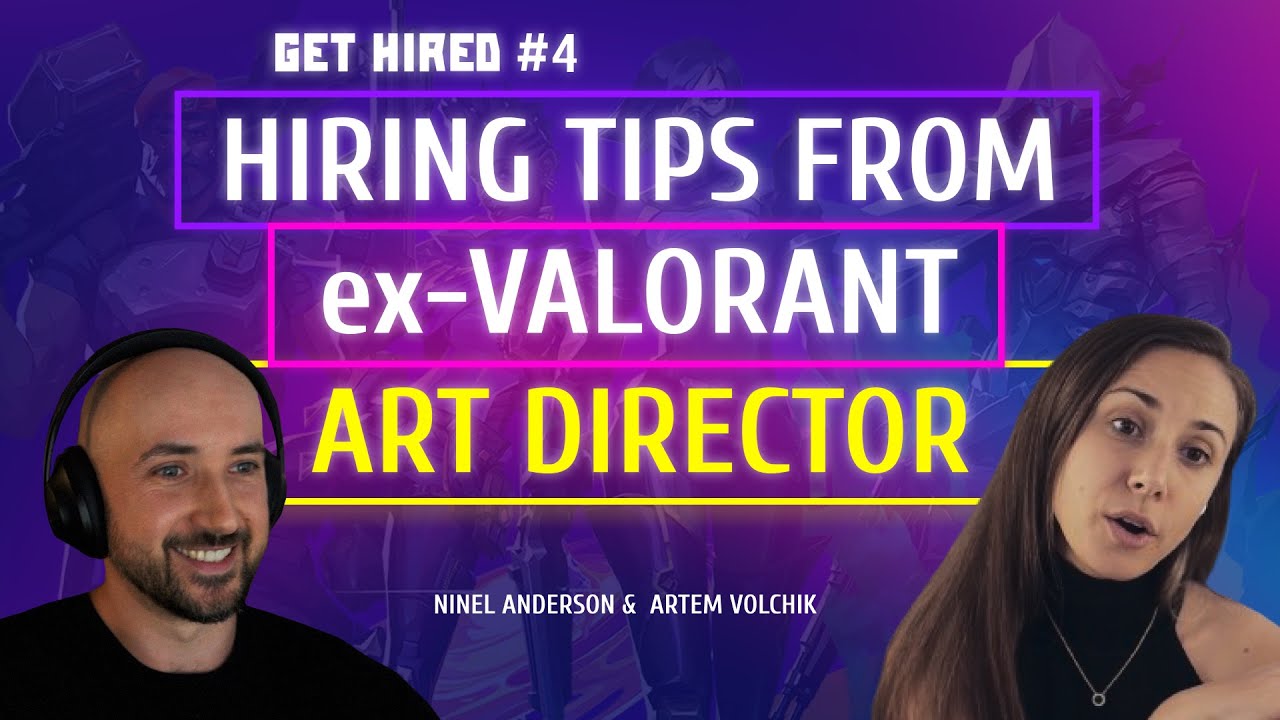
How do you get hired at a small game studio? Artem Volchik, an ex-Riot art director now at Raid Base, answers in this episode of Get Hired. He talks about how small teams choose artists.
Here is the short version: learn the studio, grow a second skill, work well with others, and know that age is not a limit.
A show by Devoted Studios. Art directors and hiring leads tell artists what they look for. Here is the short, practical version of the episode.
The short answer
- Learn the studio firstStudy its games, art style and way of working before you apply.
- Be T-shapedHave 1 strong skill and broader skills around it.
- Teamwork decidesWhen craft is equal, how you work with others matters most.
Who is talking
Artem Volchik
Art Director, ex-Riot Games
- Known for
- Art Director on VALORANT at Riot Games. The episode cover calls him an ex-VALORANT art director.
- At recording
- Art Director at Raid Base, a small game studio.
- Earlier work
- Studios such as Bungie and Blizzard, as stated in the episode description.
- First job
- Self-taught. After an art test he got his first job as an associate environment artist.

The host is Ninel Anderson, CEO of Devoted Studios.
The episode came out in February 2024, so details may have changed. The advice here does not depend on one studio.

Learn the studio
before you apply
Artem says each studio looks for something a little different. They all want an artist at the needed level, like mid or senior. So learn what the studio makes. Look at its games, genres and art style.
Look at the artists who work there. Ask what the studio is good at and what it focuses on. Then ask yourself if that appeals to you.
Also check how the team creates art. Do they sculpt a lot? Do they hand paint? Do they use new technology or their own tools? Before you apply, write 3 notes about the studio. Then show 1 piece that fits it.

what their strengths are like what they really focus on and if that’s something that appeals to you
Small teams like artists
with 1 strong skill and more
Artem says small teams look for people with more than 1 craft. He uses the word generalist. Other teams say T-shaped. It means you have broad skills and 1 skill where you are very strong.
His example: animate a character, render it, and build a small environment. You do not need to be the best at all of these things.
He says this helps his small team in prototyping and early production. Show 1 strong skill in your portfolio. Then add 1 or 2 small pieces from nearby skills.
you have broad skills but you have a vector of something you’re really specialized in
A mid-level artist can
still be a fit
A reader asked if a mid-level environment artist has any chance. Artem says his team needs people across the board. He is happy when an environment artist wants to learn more. For example, level design or world design.
He gives an example. An artist has 6 years in environment art. They love level design in their free time. Bigger studios often do not let you do this at work. Artem says this is his team’s strength.
He adds that it takes a little more time. So show your passion in your portfolio. A small level or world piece made in your free time can do that.
When craft is equal,
teamwork decides
A reader asked: if 2 artists have the same experience, who gets the job? Artem says when craft is equal, it comes down to how you work with the team.
He asks questions like these. Do you take a task and work alone? Or do you want to explore it with other people? How do you like to work?
His team likes to improve things together. He also says people bring a lot more than their craft. So in an interview, tell a short story about working with other people.
people in this type of environment bring a lot more than just their craft
Age is not a limit
for a game artist
A reader is 38 and wants to apply as a junior 3D artist. They asked if age is a limit. Artem says there should never be a limit. Artists come in all ages.
He knows people who changed careers in their late 30s or early 40s. Some became world-renowned sculptors and artists. He says it is a passion and a way to be creative.
He says he is excited to hear about anyone who starts this way. He calls it an inspiring moment. So if you think you are too late, his answer is no.
it’s never too late to be who you might have been
What Artem likes in 2 portfolios,
and one thing he would change
Artem looks at the work of 2 artists: Anessa Silzer and Vincent Boichut (both on ArtStation). Their work is credited under each image. Here are the lessons.


What works
- ✓A wide range of work and constant learning. One artist researched a real culture for her scene, and did not just copy a look.
- ✓The skill to match many styles. This helps when a team makes a prototype of a new game.
- ✓An environment artist who also makes hero props and thinks about the technical side.
- ✓Knowing where the art will be used. A shooter has limits such as walls, edges and sight lines, and the scene can still feel full of life.
- ✓A dense world with well placed props, in the engine and lit, so it feels like a real place.
What he would change
- ✕Different shading styles in 1 scene. Background leaves and a tree with a harsh black shadow did not match. Up close, the difference is easy to see.
Watch the full episode
Takeaways
To sum up: what to take from this episode
- Learn a studio’s games, art style and way of working before you apply.
- Small teams like T-shaped artists: 1 strong skill and wider skills.
- A mid-level specialist can fit when they want to grow in a nearby area.
- When craft is equal, how you work with others decides.
- Show that you know where your art will be used, such as the limits of a game map.
- Age is not a limit, says Artem.
More from Get Hired
- How to get hired as an environment artist: advice from the art director behind PaliaGet Hired #1, Jeremy Fenske
- How to get hired as a 3D artist: what the Battlefield art director looks forGet Hired #2, Chris Matthews
- How to get hired as a junior game artist: advice from the art director behind LEGO 2K DriveGet Hired #3, Emmanuel Valdez
About Devoted
Why we make Get Hired
Get Hired is a show by Devoted Studios. We build art and engineering teams for game studios, so we look at portfolios and talk with hiring leads all the time. We made the show to share what they tell us with every artist, not only with the people we work with.
Devoted is a team of 300+ people. Studios call us when they have a hard problem and do not yet know how to solve it. We join their team and work as part of it.
Artem says it is never too late to start. Watch the full episode to hear his advice and his portfolio feedback. Subscribe to the channel, and say hi if you want to talk about working with us.
Episode: Get Hired #4, Devoted Talks, February 2024. Watch on YouTube
Quotes and timestamps: from the episode. Timestamps open the video at that moment. Studio details were true when it was recorded and may have changed.