 Skip to content


How to get hired as an environment artist: advice from the art director behind Palia
A studio said no. That does not mean you are a bad artist.
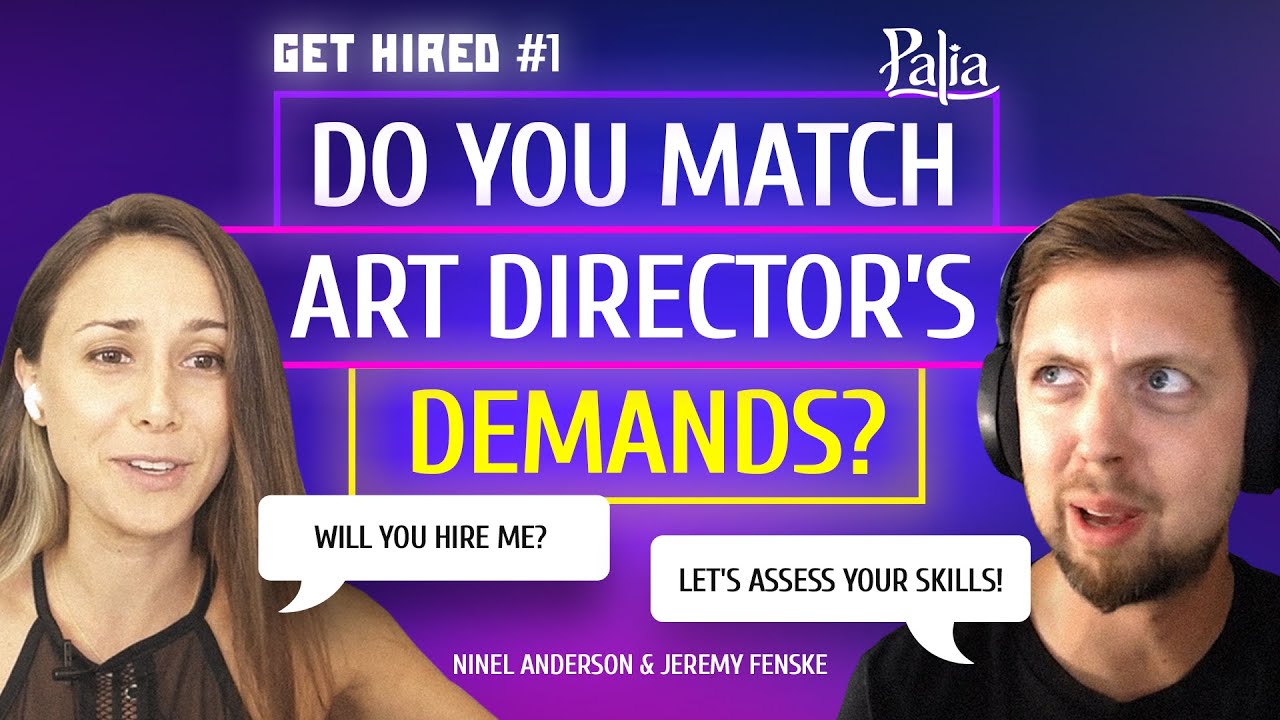
How do you get hired as an environment artist? Jeremy Fenske, who led the art on Palia at Singularity 6, answers in this episode of Get Hired. He goes through the portfolios of artists on his team and says what made him say yes.
Here is the short version: what to show, how junior and senior artists are judged, and why a “no” is rarely about you.
A show by Devoted Studios. Art directors and hiring leads tell artists what they look for. Here is the short, practical version of the episode.
The short answer
- Show a whole sceneEnvironment artists get noticed with full scenes, not single props. A short video through the space helps.
- Juniors sell taste, seniors sell proofA junior can show hand painted work. A senior should show Unreal and PBR.
- Know more than your main skillEarly in a project, studios want artists who understand the wider pipeline.
Who is talking
Jeremy Fenske
Art Director, Singularity 6
- At recording
- Art Director at Singularity 6, leading the art on the game Palia.
- Earlier work
- Destiny 2 and The Elder Scrolls Online.
- First studio interview
- Early in 2009. He had sent his portfolio to studios before he finished his 4 year art degree.

Jeremy came to games from art school. Before he graduated, he sent his portfolio to studios everywhere, and a few of them answered. That is how his first studio interview happened. The host is Ninel Anderson, CEO of Devoted Studios.
The episode was recorded in 2023, so studio details may have changed. The advice about portfolios does not depend on any one company.

A “no” is a business
decision, not a verdict
Jeremy starts with the hard part. If a studio says no, it does not mean you are a bad artist, and it does not mean you did something wrong. It means your work was not what the project needed at that moment.
It also does not mean you will never work there. Keep your work online, keep improving it, and apply again when the team needs what you do.

This is a business decision. And it’s not a personal decision.
Show a whole scene,
not a folder of props
For an environment artist, Jeremy wants to see a whole scene, not only single assets. He wants to see that you can fit everything together and present it well.
One artist he hired, still in school at the time, showed a short video that moves through her space. It made her color design, 2D fundamentals and composition easy to see.
Do not forget the engine. For environment art, the team looks for Unreal experience. A student without it can still get in, but it is a clear plus.
We really like to see pieces in your portfolio where you’re tackling a whole scene and not necessarily just an individual asset.
Juniors are hired for taste,
seniors for proof
Jeremy likes to have early-career and later-career artists on every team. Seniors mentor. Juniors bring fresh ideas and get a safe place to learn.
For a junior, taste and potential count most. Hand painted, non-PBR work was fine. For a senior, he expects a deep understanding of Unreal and PBR workflows, because the whole team works that way.
One senior he hired showed stylized trim sheets made in ZBrush. They looked great and they were also performant. That is the kind of proof that made Jeremy interested.
Early in a project, studios
want more than one skill
At the start of a game, the team is small. Jeremy wants artists who are not masters of one narrow slice, but who understand the broader pipeline.
He gives three examples. A character artist who also builds rigs and understands skinning, simulation and shaders, not as deep as a technical artist, but enough to help. A concept artist with strong color, lighting and design, who is also technical and shipped a full game with a friend. And a senior generalist who can build scenes, characters, rigs, blueprints and maps.
I like to get people who are not just like masters at one sliver of art, but kind of understand the broader pipeline.
Make a painting look
like one hand made it
At the end, Jeremy gives feedback on 5 pieces of art in a game with Ninel. You do not need the game to use his feedback. It is a good checklist for any image in your portfolio:
- 1Hierarchy of reads. The most important elements should stand out, with light or contrast. In one image, his eye kept going to a path in the middle that went nowhere.
- 2Consistent energy. In a dynamic scene, one static object stands out. In the beach ball scene, he would tilt the ball or make it bounce.
- 3Lead the eye in circles. Group your focal points and the line of action, so the viewer keeps looking at the details and the story.
- 4Connect foreground and background. Empty space between a strong foreground and the background breaks the read.
- 5One language of mark making. Use the same kind of brush work across the whole painting, so it feels like one piece and not a collection of separate images.
So it feels not like it’s a collection of separate images, but that it’s a holistic painted piece.
What Jeremy likes in portfolios,
and what worries him
In the portfolio review, Jeremy goes through the work of artists on his own team. Here are the lessons, with a few frames from the review. The artists are credited in the episode.


What works
- ✓A whole scene with a short video through it, good color design and a clear composition.
- ✓Stylized trim sheets made in ZBrush that also run well in a game.
- ✓Some rigging, skinning and shader knowledge. It does not need to be as deep as a technical artist, but it helps the pipeline.
- ✓A concept artist with good color, light and design, who is also technical.
What worries him
- ✕Hand painted work is fine for a junior. A senior without Unreal and PBR knowledge is a concern.
- ✕A weak focal point: the eye goes to the wrong place.
- ✕Mixed painting techniques, so one image looks like a collection of separate images.
Watch the full episode
Takeaways
To sum up: what to take from this episode
- A no from a studio is about what the project needs now, not about you.
- Environment artists: show a whole scene, with a short video through it.
- Show Unreal work. For a senior role, show PBR too.
- Juniors sell taste and potential. Seniors sell proven skills.
- Early in a project, show that you understand the pipeline beyond your main skill.
- Check every image: a clear focal point, one painting language, no empty gap between foreground and background.
More from Get Hired
About Devoted
Why we make Get Hired
Get Hired is a show by Devoted Studios. We build art and engineering teams for game studios, so we look at portfolios and talk with hiring leads all the time. We made the show to share what they tell us with every artist, not only with the people we work with.
Devoted is a team of 300+ people. Studios call us when they have a hard problem and do not yet know how to solve it. We join their team and work as part of it.
If this episode helped, subscribe to the channel so you do not miss the next one. And if you want to talk about working with us, say hi.
Episode: Get Hired #1, Devoted Talks, September 2023. Watch on YouTube
Quotes and timestamps: from the episode. Timestamps open the video at that moment. Studio details were true when it was recorded and may have changed.